
Book Appointment Now
Material ductility
Define this requirement in your drawing or specification so the engineering review has a clear starting point.

GC INDUS / ENGINEERED TO YOUR DRAWING
Form metal through controlled pressure for repeatable fasteners and precision hardware.
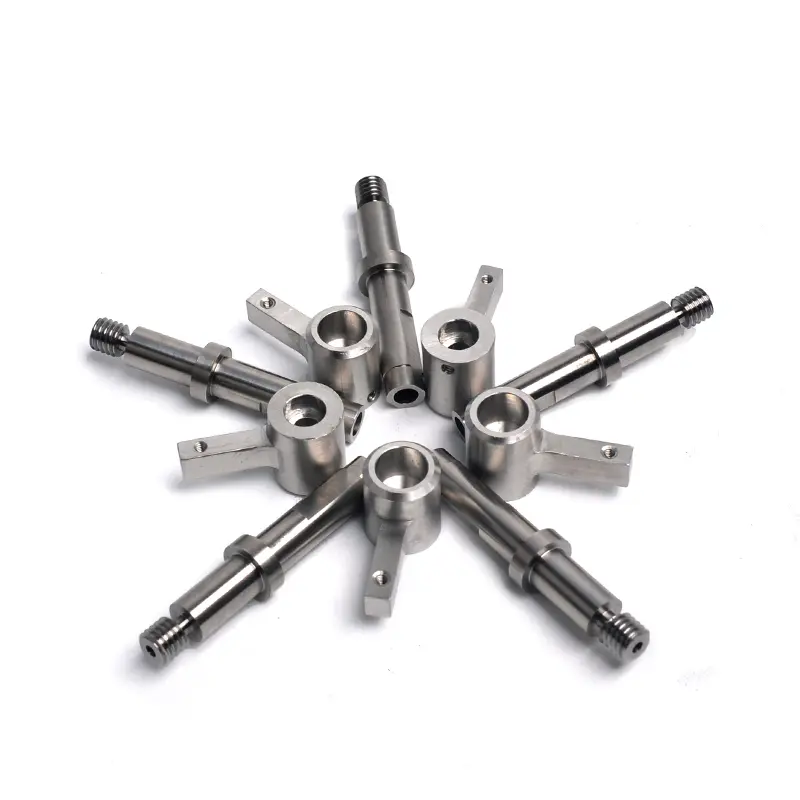
01 / ENGINEERING INTENT
A useful manufacturing decision connects function, geometry and inspection. Start with the requirements that matter to your part.
Define this requirement in your drawing or specification so the engineering review has a clear starting point.
Review its relationship with the selected process, material and production quantity.
Identify acceptance criteria and the information required for verification.
02 / PROCESS LOGIC
Explore the key stages. Select a step to follow the manufacturing route.
Cut and prepare the selected stock for the planned forming sequence.
Apply die pressure to reshape the blank; check material flow and tool loading.
Add threads, machined features or heat treatment where the specification requires them.
Verify formed geometry, threads and the agreed surface and material requirements.
03 / MANUFACTURING IN DETAIL
04 / TECHNICAL LIBRARY
Explore Cold Forging by topic. Connect the process, materials and requirements before your engineering review.
GC Indus provides professional cold forging manufacturing services designed for producing high-strength metal components with excellent dimensional accuracy and material efficiency. Cold forging is a forming process where metal is shaped at room temperature using high pressure, allowing the material to retain its strength while achieving precise geometries.
Compared with traditional machining processes, cold forging offers significant advantages such as higher production efficiency, improved mechanical strength, reduced material waste, and excellent surface finish . This makes it particularly suitable for manufacturing fasteners, automotive components, precision shafts, and high-volume mechanical parts.
At GC Indus , our cold forging capabilities include multi-station cold heading, extrusion, upsetting, and precision forming processes , enabling us to manufacture complex metal components with tight tolerances. Our engineering team works closely with customers to optimize part design, ensuring efficient production and consistent quality.
By combining advanced forging equipment with strict quality control systems, GC Indus delivers reliable cold forged components for a wide range of industries worldwide.
GC Indus offers comprehensive cold forging solutions that support both prototype development and large-scale mass production .
Multi-station cold heading machines allow multiple forming steps to be completed in a single production cycle. This process improves production speed and enables complex shapes to be formed efficiently.
Cold extrusion is used to produce parts with precise internal or external profiles. This method is commonly applied in manufacturing shafts, cylindrical parts, and structural components.
Upsetting is a common cold forging process used to increase the diameter of a metal part by compressing it axially. This technique is widely used in the production of bolts, screws, and fasteners.
Cold forged components such as bolts, gears, shafts, and fasteners are essential in automotive manufacturing due to their strength and reliability.
Cold forging produces durable mechanical components including connectors, pins, bushings, and structural parts used in heavy equipment.
Precision cold forged metal components are widely used in electronic devices and electrical connectors.
Cold forged fasteners, anchors, and structural fittings are commonly used in construction and building hardware.
Start Your Cold Forging Project Today
Cold forging allows parts to be produced rapidly in high volumes, making it an ideal process for mass production.
Because the metal grain structure flows along the shape of the part during forging, cold forged components often have higher strength and durability than machined parts.
Cold forging minimizes material waste compared with traditional machining processes, which helps reduce overall production costs.
Advanced cold forging equipment ensures precise part dimensions and consistent product quality across large production batches.
GC Indus provides complete manufacturing solutions including forging, machining, heat treatment, surface finishing, and assembly , simplifying supply chain management.
High strength after heat treatment
Cost-effective for large production
Excellent fatigue resistance
Suitable for structural components
Excellent corrosion resistance
Suitable for harsh environments
Good corrosion resistance
High strength-to-weight ratio
Cold forging is a metal forming process performed at or near room temperature. Unlike hot forging, which requires the material to be heated to high temperatures before shaping, cold forging uses extremely high pressure to deform the metal into the desired shape without heating it.
One of the major advantages of cold forging is that it preserves the material’s grain structure, which improves the strength and durability of the final product. The process also produces parts with better surface finish and tighter dimensional tolerances.
Cold forging is particularly suitable for high-volume production of parts such as fasteners, shafts, and automotive components. Hot forging, on the other hand, is more commonly used for very large or extremely complex parts that require extensive deformation.
Cold forging is most suitable for components that require high strength, high precision, and large production volumes . Examples include bolts, screws, rivets, shafts, gears, pins, and structural fasteners.
Because the process compresses and reshapes metal rather than removing material, cold forged parts often exhibit superior mechanical properties compared with machined parts.
Industries such as automotive, electronics, construction, and industrial machinery commonly rely on cold forging for producing durable components that must withstand heavy loads and repeated stress.
Cold forging offers several advantages over CNC machining , particularly for high-volume production.
First, cold forging significantly reduces material waste because the metal is shaped rather than cut. This leads to improved material utilization and lower production costs.
Second, cold forging increases mechanical strength due to the continuous grain flow created during the forming process. This results in parts that are stronger and more resistant to fatigue.
Third, the process allows high production speeds, making it ideal for mass manufacturing.
However, CNC machining is still necessary for parts that require extremely complex geometries or low production volumes.
Materials used in cold forging must have good ductility and formability to withstand the intense pressure applied during the forging process.
Common materials include carbon steel, alloy steel, stainless steel, aluminum , and copper alloys. Each material offers different properties depending on the application.
For example, carbon steel is commonly used for fasteners due to its strength and cost efficiency, while stainless steel is chosen for its corrosion resistance in harsh environments.
Material selection must consider factors such as mechanical strength, environmental conditions, and production cost.
Cold forging is widely used in industries that require durable metal components produced in large quantities.
The automotive industry uses cold forging to produce critical components such as bolts, gears, and shafts. Electronics manufacturers rely on cold forged connectors and structural parts.
Construction hardware such as anchors and structural fasteners are also commonly produced using cold forging.
In addition, industrial machinery and aerospace applications use cold forged components for their strength and reliability.
During cold forging, the metal undergoes plastic deformation that aligns the grain structure along the shape of the part. This grain flow improves the strength and fatigue resistance of the component.
Unlike machining, which cuts through the material and disrupts the grain structure, cold forging maintains the integrity of the metal’s internal structure.
This results in components that are stronger, more durable, and better suited for applications that require high mechanical performance.
Cold forging can achieve very precise dimensions, especially when using modern multi-station forging equipment.
Typical tolerances range from ±0.02 mm to ±0.05 mm , depending on part complexity and material type.
For parts requiring even tighter tolerances, secondary machining operations such as CNC turning or grinding can be performed.
Cold forging is best suited for parts with relatively symmetrical or axisymmetric shapes, such as fasteners and shafts.
For extremely complex geometries, additional processes such as CNC machining may be required after forging.
However, advances in multi-station forging technology allow increasingly complex shapes to be produced directly through forging.
Cold forging is highly cost-effective for large production volumes because it reduces material waste and increases production speed.
Once the tooling is developed, thousands or even millions of parts can be produced efficiently with minimal variation.
Although tooling costs can be relatively high initially, the overall cost per part becomes significantly lower in high-volume production.
GC Indus implements strict quality control procedures throughout the manufacturing process.
This includes material inspection, in-process dimensional checks, and final product testing to ensure that each component meets design specifications.
Advanced measuring equipment and experienced quality engineers ensure consistent product performance and reliability.
When designing parts for cold forging, several factors should be considered to ensure efficient manufacturing and optimal product performance.
Parts with symmetrical shapes and smooth transitions are easier to forge and reduce tooling complexity.
Sharp corners can cause stress concentration and increase the risk of material cracking during forging.
Designs should allow metal to flow smoothly within the die cavity to ensure proper filling and avoid defects.
Designing parts with minimal excess material helps reduce production costs and improve manufacturing efficiency.
If features such as threads, grooves, or precision holes are required, they can be added through secondary machining processes
Start Your Machining Project Today
READY FOR ENGINEERING REVIEW
Share the model, material, quantity and critical requirements.
Start your project ↗


