
Book Appointment Now

GC INDUS / MANUFACTURING KNOWLEDGE
How Custom Fixtures and Jigs Improve CNC Machining Accuracy and Production Efficiency
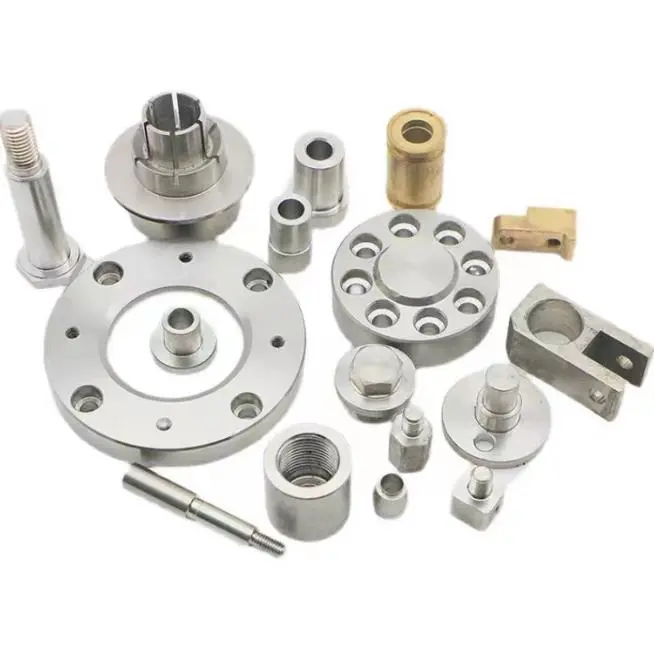

Precision machining is not determined by the CNC machine alone.
Even an advanced CNC machining center can struggle to maintain consistent results if the workpiece is not positioned, supported, and restrained correctly.
This is where custom fixtures and jigs become important.
A well-designed fixture establishes a repeatable relationship between the workpiece and the machine. It helps control positioning, support the component during cutting, reduce unnecessary movement, and make repeated production more consistent.
For manufacturers producing complex mechanical components, automation equipment, industrial machinery, automotive parts, electronics housings, and other precision products, fixture design can have a direct effect on:
- Machining accuracy
- Repeatability
- Setup time
- Cycle time
- Operator efficiency
- Tool access
- Inspection consistency
- Production cost
GC INDUS provides custom fixtures and jigs machining using CNC milling, turning, grinding, wire EDM, precision assembly, and related manufacturing capabilities. The company supports prototype tooling as well as production fixtures for different industrial applications.
This article explains how fixtures and jigs work, when custom tooling is necessary, how fixture design affects CNC machining accuracy, and what engineers should consider before manufacturing a custom fixture.
1. What Is a Manufacturing Fixture?
A fixture is a device used to locate, support, and secure a workpiece during a manufacturing operation.
In CNC machining, the fixture establishes a controlled relationship between:
Machine → Fixture → Workpiece → Cutting Tool
The fixture normally remains stationary while the workpiece is positioned within it.
Its main purposes are to:
- Locate the workpiece
- Support the workpiece
- Prevent unwanted movement
- Maintain repeatable positioning
- Provide access for machining
- Reduce setup variation
A fixture can be relatively simple, such as a vise with locating stops, or highly customized, such as a dedicated multi-point fixture for a complex production component.
2. Fixture vs. Jig: What Is the Difference?
The terms fixture and jig are sometimes used interchangeably, but they traditionally have different functions.
A fixture primarily holds and locates the workpiece.
A jig can both locate the workpiece and guide a cutting tool or operation.
For example, an assembly jig may help position components during assembly.
A drilling jig may guide the drill to a predetermined location.
A CNC machining fixture may secure a complex component while the CNC machine performs milling, drilling, tapping, or other operations.
In modern manufacturing environments, the terminology can vary by company, but the basic objective remains the same:
Create a repeatable and controlled manufacturing process.
3. Why Fixture Design Affects CNC Accuracy
CNC programming defines the toolpath, but the toolpath can only produce the intended result if the workpiece remains correctly positioned.
Poor workholding can lead to:
- Workpiece movement
- Vibration
- Deflection
- Dimensional variation
- Poor surface finish
- Tool wear
- Scrap
A rigid fixture helps establish stable cutting conditions.
For example, if a thin aluminum housing is clamped too aggressively, the component may deform during machining. When it is released, the material can partially return to its original shape.
The result may be a part that measures differently after unclamping than it did while it was being machined.
Fixture design must therefore balance:
Clamping Force + Support + Accessibility + Part Protection
4. The 3-2-1 Locating Principle
A common concept in fixture design is the 3-2-1 locating principle.
The basic concept uses locating points to constrain the workpiece’s degrees of freedom.
Typically:
- Three points establish the primary plane
- Two points establish the secondary plane
- One point establishes the tertiary plane
This creates a repeatable reference system.
The actual implementation depends on the component geometry.
The fixture designer needs to understand the part’s functional datums and determine how those datums should be established during machining.
This is particularly important when the finished component contains several critical relationships.
5. Datums and Fixture Design
Datums are fundamental to precision machining.
A drawing may define a primary, secondary, and tertiary datum to establish the intended coordinate relationship between features.
The fixture should ideally establish the workpiece relative to those functional references.
If the fixture locates the component using unrelated surfaces, machining accuracy can be affected by accumulated variation.
This is one reason engineers should consider fixture design while developing the drawing rather than treating it as an afterthought.
For components with complex geometric requirements, GD&T can help communicate the intended relationship between datums and features.
6. Clamping Force Matters
A fixture must hold the workpiece securely, but maximum clamping force is not always desirable.
Excessive force can deform:
- Thin walls
- Tubes
- Aluminum components
- Plastic components
- Thin sheet metal
- Precision housings
Insufficient force can allow:
- Movement
- Chatter
- Vibration
- Dimensional errors
The appropriate clamping method depends on the material and geometry.
Possible approaches include:
- Mechanical clamps
- Pneumatic clamps
- Hydraulic clamps
- Vacuum fixtures
- Magnetic fixtures
- Soft jaws
- Custom locating pins
The fixture should secure the part while minimizing unnecessary deformation.
7. Supporting Thin-Wall Components
Thin-wall components are especially sensitive to workholding.
Consider a machined aluminum enclosure with a wall thickness of only a few millimeters.
If the fixture applies excessive force to one side, the wall may deflect.
During machining, the part may appear stable.
After removing the clamps, however, the component can spring back.
This can affect:
- Wall thickness
- Hole location
- Flatness
- Parallelism
- Assembly fit
A better fixture may distribute the clamping load across multiple support points.
Soft contact surfaces can also help protect finished areas.
8. Fixture Accessibility
A fixture should not only hold the workpiece securely.
It should also allow the cutting tool to reach the required features.
Poor fixture design can block:
- Tool access
- Hole locations
- Pocket areas
- Side features
- Threaded holes
- Inspection surfaces
This can force additional setups.
Additional setups can introduce:
- Setup time
- Positioning variation
- Additional datum transfers
- Increased labor
- Higher inspection requirements
For complex parts, 5-axis CNC machining can sometimes improve access to multiple surfaces and reduce repositioning.
9. Reducing the Number of Setups
Setup reduction is one of the major benefits of effective fixture design.
Suppose a component requires machining on four sides.
A basic process might require:
Setup 1 → Setup 2 → Setup 3 → Setup 4
Each repositioning introduces another opportunity for variation.
A well-designed fixture may allow multiple features to be machined in fewer setups.
This can improve:
- Positional consistency
- Production efficiency
- Cycle time
- Operator productivity
It can also simplify inspection because more features may be created from a controlled datum structure.
10. Fixtures for CNC Milling
CNC milling fixtures are commonly used for:
- Brackets
- Housings
- Plates
- Blocks
- Frames
- Machine components
- Complex mechanical parts
A milling fixture typically needs to provide:
- Stable locating
- Secure clamping
- Tool clearance
- Chip evacuation
- Easy loading and unloading
- Repeatable positioning
For production parts, quick-loading features can significantly reduce operator setup time.
For prototypes, simpler adjustable fixtures may be more economical.
GC INDUS provides CNC machining services for custom components and can integrate fixture considerations into the manufacturing process.
11. Fixtures for CNC Turning
Turning operations also require appropriate workholding.
Common solutions include:
- Three-jaw chucks
- Four-jaw chucks
- Collets
- Soft jaws
- Custom jaws
- Mandrels
- Steady rests
For standard cylindrical parts, conventional workholding may be sufficient.
For irregular or delicate components, custom jaws or fixtures may be required.
Custom soft jaws can be machined to match the component geometry.
This allows the workpiece to be held securely without unnecessarily damaging finished surfaces.
GC INDUS provides CNC turning for precision cylindrical and rotational components.
12. Soft Jaws for Precision Components
Soft jaws are commonly used when standard hard jaws are unsuitable.
They can be machined to match the outside or inside geometry of a component.
Benefits may include:
- Better contact
- Improved stability
- Reduced surface damage
- Better repeatability
- Faster loading
Soft jaws can be particularly useful for production runs where many identical parts need to be held repeatedly.
The jaw geometry should account for:
- Clamping force
- Contact area
- Part geometry
- Machining access
- Part deformation
13. Fixtures for Multiple Parts
When production quantities increase, multi-part fixtures can improve efficiency.
Instead of loading one component at a time, a fixture may hold:
4, 8, 12, or more parts
depending on the machine, component size, and machining strategy.
The advantages can include:
- Reduced loading time
- Better machine utilization
- Lower operator intervention
- More efficient cycle planning
However, multi-part fixtures also introduce additional considerations.
All workpiece locations must remain consistent.
Tool reach must be sufficient.
Chip evacuation must be considered.
The fixture must also maintain adequate rigidity across every position.
14. Fixtures for Automated Manufacturing
Fixtures become particularly important when automation is introduced.
Automated systems require repeatable positioning.
A robot or automated loader needs to know that every workpiece is presented in a predictable orientation.
This can involve:
- Locating pins
- Datum surfaces
- Pneumatic clamps
- Hydraulic clamping
- Sensors
- Part-presence detection
- Quick-change systems
A well-designed fixture can therefore become part of the automation system rather than simply a workholding device.
15. Inspection Fixtures
Fixtures are not limited to machining.
They can also be used during inspection.
An inspection fixture positions the component consistently so that measurements can be repeated under controlled conditions.
This is useful when checking:
- Hole location
- Flatness
- Alignment
- Assembly interfaces
- Profile
- Orientation
GC INDUS specifically provides inspection fixtures for securely positioning workpieces during CNC milling, turning, and drilling operations.
16. Assembly Jigs
Assembly jigs help ensure that components are positioned consistently during assembly.
They can be useful for:
- Press fitting
- Fastening
- Welding
- Adhesive bonding
- Component alignment
- Repetitive assembly
For example, if an assembly requires a bracket to be installed at exactly the same position on every product, an assembly jig can establish the location quickly.
This reduces dependence on manual measurement.
It can also reduce operator variation.
17. Welding Fixtures
Welding can cause significant variation because of:
- Heat
- Thermal expansion
- Material movement
- Operator technique
A welding fixture can hold components in the intended position during welding.
This can improve:
- Joint alignment
- Dimensional consistency
- Repeatability
- Production efficiency
GC INDUS provides custom welding fixtures as part of its fixture and jig manufacturing capability.
18. Material Selection for Fixtures
Fixture materials should be selected according to the application.
Common options can include:
- Tool steel
- Carbon steel
- Stainless steel
- Aluminum
- Engineering plastics
- Hardened steels
Aluminum may be attractive when low weight and easy machining are important.
Tool steel may be appropriate for high-wear locating or clamping elements.
Stainless steel may be useful in environments where corrosion resistance is important.
The fixture material should be evaluated together with:
- Production volume
- Load
- Wear
- Temperature
- Required accuracy
- Expected service life
19. Fixture Design and Production Volume
Production quantity strongly influences fixture economics.
Prototype
A simple fixture may be sufficient.
The priority is flexibility.
Low Volume
Adjustable or modular fixtures may provide a good balance between cost and repeatability.
Medium Volume
Dedicated fixtures can reduce setup time and improve consistency.
High Volume
Highly optimized fixtures with automated loading and clamping may provide significant productivity benefits.
The fixture should therefore be designed according to the expected production life of the project.
20. Modular Fixtures vs. Dedicated Fixtures
A modular fixture uses interchangeable components.
Advantages may include:
- Flexibility
- Faster reconfiguration
- Lower tooling investment
- Support for multiple part variants
Dedicated fixtures are designed for a specific component.
Advantages may include:
- Faster loading
- Better repeatability
- Optimized tool access
- Higher production efficiency
The best choice depends on how frequently the part design changes and how many parts will be produced.
21. Quick-Change Fixture Systems
For repetitive production, quick-change systems can reduce downtime.
A quick-change fixture can allow an operator to:
- Remove the completed workpiece
- Load a new workpiece
- Secure the component
- Verify positioning
- Restart the machining cycle
If the fixture interface remains consistent, fixture replacement can also become easier.
This can be useful in environments where several products share the same machine.
22. Fixture Design for Inspection and Traceability
Quality requirements should be considered during fixture design.
If critical dimensions need to be inspected, the fixture should not block the inspection equipment.
For example, an inspection fixture may need to expose:
- Datum surfaces
- Hole locations
- Mating surfaces
- Critical profiles
A fixture can also help establish consistent measurement conditions.
This is particularly useful for production environments where repeatability is important.
GC INDUS combines engineering review, process control, and inspection as part of its manufacturing workflow. The company’s precision machining service describes material certification, first-article inspection, in-process checks, and final validation.
23. Fixture Design and Cost Reduction
A fixture can reduce manufacturing cost in several ways.
Fewer Setups
Less setup time can reduce labor and machine downtime.
Faster Loading
Better accessibility can shorten operator handling time.
Better Repeatability
Stable positioning can reduce scrap and rework.
Better Tool Access
Improved access can reduce special tooling requirements.
Multi-Part Processing
Multiple components can sometimes be machined in one cycle.
However, fixture cost should always be evaluated against expected production volume.
A complex fixture may not make economic sense for ten prototype parts.
The same fixture could be highly valuable for tens of thousands of production components.
24. Common Fixture Design Mistakes
Several problems can reduce fixture performance.
Mistake 1: Too Much Clamping Force
This can deform the component.
Mistake 2: Poor Datum Selection
The fixture may not establish the intended functional reference.
Mistake 3: Blocking Tool Access
The machine cannot reach important features.
Mistake 4: Ignoring Chip Evacuation
Accumulated chips can affect seating and positioning.
Mistake 5: No Provision for Inspection
Critical features may become difficult to measure.
Mistake 6: Over-Engineering for Low Volume
The fixture may cost more than the production justifies.
Mistake 7: Ignoring Future Part Variations
A completely dedicated fixture may become obsolete if the design changes frequently.
25. Designing a Fixture From a CAD Model
The fixture development process typically starts with the component’s:
- 3D CAD model
- 2D drawing
- Datums
- Tolerances
- Material
- Surface requirements
- Production volume
The fixture designer then evaluates:
Where should the part be located?
Where should it be supported?
Where can it be clamped?
Where does the cutting tool need access?
How will the operator load the part?
How will the finished component be removed?
How will critical features be inspected?
These questions should be answered before manufacturing the fixture.
26. Fixture Design for Complex Parts
Complex parts often require more sophisticated workholding.
Examples include:
- Impellers
- Curved housings
- Thin-wall structures
- Multi-face brackets
- Irregular castings
- Complex aerospace components
For these parts, the fixture may combine:
- Custom locating points
- Form supports
- Vacuum clamping
- Soft jaws
- Multiple clamps
- Adjustable supports
The goal is to provide stability without interfering with the machining operation.
27. When Should You Use a Custom Fixture?
A custom fixture may be justified when:
- The component has unusual geometry
- Standard workholding cannot provide sufficient stability
- Multiple setups are causing variation
- Production volume is high
- Loading time is excessive
- Critical features require repeatable positioning
- The component is thin or easily deformed
- Automation is planned
For simple one-off components, standard workholding may be sufficient.
A manufacturing engineer should evaluate the economics before developing dedicated tooling.
28. Frequently Asked Questions
1. What is the purpose of a CNC machining fixture?
A CNC fixture locates, supports, and secures a workpiece so it can be machined consistently and accurately.
2. What is the difference between a jig and a fixture?
A fixture primarily holds and locates a workpiece, while a jig traditionally also guides the cutting tool or manufacturing operation.
3. Do all CNC machined parts need custom fixtures?
No. Standard vises, chucks, collets, and other workholding systems are sufficient for many components. Custom fixtures become useful when geometry, accuracy, production volume, or accessibility creates special requirements.
4. Can fixtures reduce CNC machining costs?
Yes. Proper fixture design can reduce setup time, improve repeatability, increase machine utilization, and reduce scrap.
5. Can one fixture hold multiple parts?
Yes. Multi-part fixtures can hold several workpieces simultaneously when the machine, geometry, tool access, and production requirements allow it.
6. What materials are used to make fixtures?
Common choices include aluminum, steel, stainless steel, tool steel, and engineering plastics. The appropriate material depends on load, wear, accuracy, environment, and production volume.
7. Can fixtures be used for inspection?
Yes. Inspection fixtures can position components consistently so critical dimensions and geometric features can be measured under repeatable conditions.
8. How do I request a custom fixture?
Provide the component’s CAD model, drawing, material, critical tolerances, production quantity, machining process, and any special loading or inspection requirements. The engineering team can then evaluate the fixture concept and manufacturing approach.
Conclusion
Fixtures and jigs are an important part of precision manufacturing because they connect the workpiece to the manufacturing process.
A well-designed fixture can improve:
Accuracy + Repeatability + Setup Efficiency + Production Speed + Quality
The right fixture should locate the component from appropriate datums, provide sufficient support, control clamping force, maintain tool access, and allow efficient loading and inspection.
Fixture design should also be matched to production volume.
A simple prototype may only require standard workholding.
A high-volume production component may justify a dedicated automated fixture.
GC INDUS provides custom fixture and jig machining together with CNC milling, turning, grinding, wire EDM, assembly, and inspection capabilities.
If your component is difficult to hold, requires multiple setups, or needs repeatable positioning for production, a custom fixture may be worth considering.
Send your CAD model and drawing to the GC INDUS engineering team for evaluation.


