
Book Appointment Now

GC INDUS / MANUFACTURING KNOWLEDGE
How to Prepare a CNC Machining RFQ: Drawings, Tolerances, Materials, and Inspection Requirements
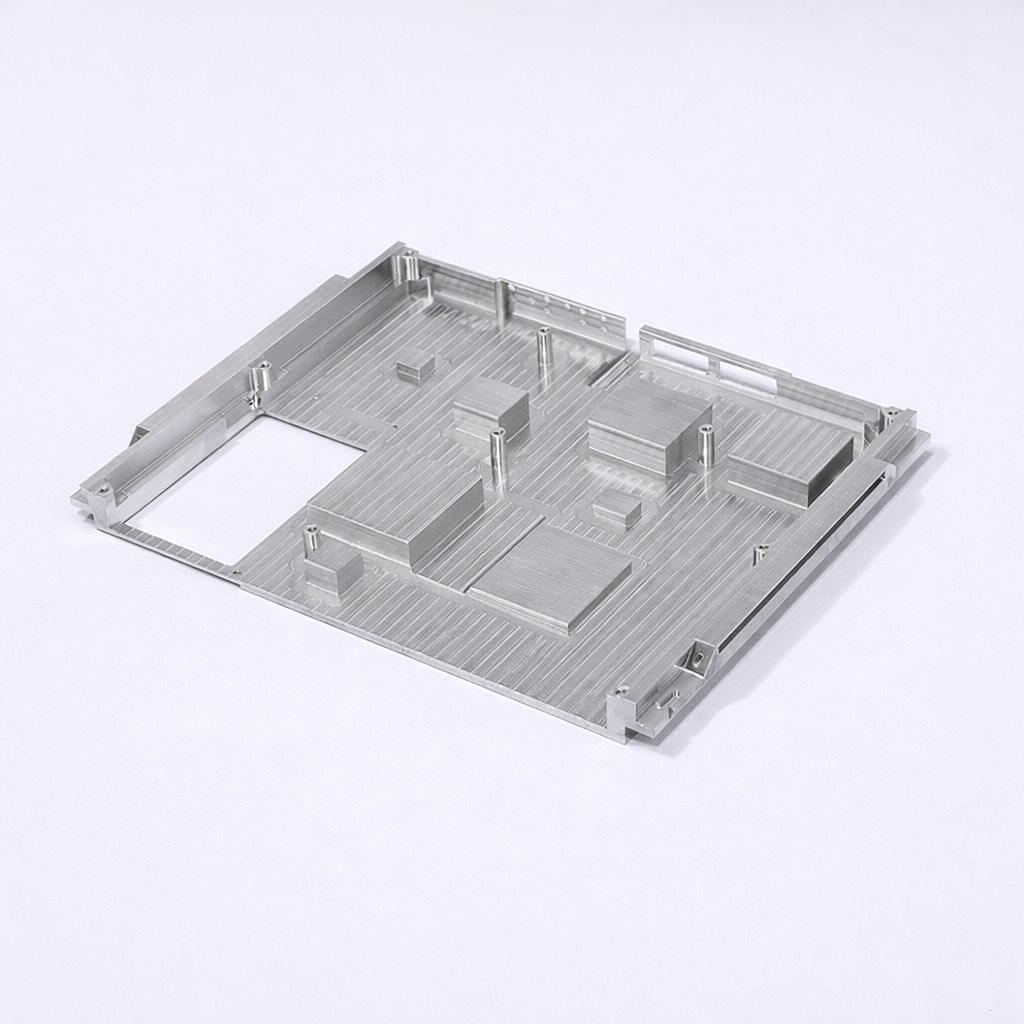

A request for quotation (RFQ) is more than a request for a unit price. For custom CNC machined components, it is the starting point for evaluating manufacturability, material availability, machining strategy, inspection requirements, production lead time, and total cost.
An incomplete RFQ can create unnecessary clarification rounds, inaccurate quotations, and unexpected changes after production begins. Missing tolerances may lead to different interpretations of the drawing. An unspecified material grade can affect both price and mechanical performance. Unclear inspection requirements may result in a supplier quoting a process that does not meet the customer’s actual expectations.
For engineers, product developers, and procurement teams, a well-prepared RFQ helps manufacturers understand what the part must do and how its critical characteristics will be verified.
This guide explains how to prepare an effective CNC machining RFQ, from drawing preparation and material selection to tolerances, surface finishing, quantities, quality documentation, and supplier evaluation.
1. Define the Purpose of the RFQ Before Requesting a Quote
Before sending files to a manufacturer, clarify what you are purchasing and what stage the project has reached.
A prototype RFQ may prioritize design validation, speed, and flexibility. A production RFQ may require repeatable quality, stable lead times, documented inspection, and predictable unit pricing.
Common CNC machining RFQ scenarios include:
- Prototype parts for engineering validation
- Low-volume custom components
- Production parts for industrial equipment
- Replacement components for existing machinery
- Precision parts requiring tight dimensional control
- Components that combine machining and surface treatment
- Parts requiring secondary operations or assembly
The supplier needs to understand the intended application because the same geometry may require different manufacturing strategies depending on the functional requirements.
For example, a simple aluminum mounting block used for a prototype may need only basic dimensional verification. A similar block used as a precision locating interface in production equipment may require controlled hole positions, defined datums, and documented inspection results.
Start with a clear description of the project, its intended use, the required quantity, and the expected delivery schedule.
GC INDUS provides CNC machining services for custom metal and engineering plastic components. Its broader manufacturing services can also be considered when the project requires more than conventional machining.
2. Provide Complete and Consistent Engineering Drawings
The engineering drawing is usually one of the most important documents in a machining RFQ. A 3D CAD model communicates geometry, but it may not fully define tolerances, surface finish, material condition, or inspection requirements.
Whenever possible, provide both a 3D model and a 2D drawing.
What the 2D drawing should include
A production-ready drawing should clearly identify:
- Overall dimensions
- Critical feature dimensions
- Hole diameters and positions
- Thread specifications
- General and individual tolerances
- Datum references
- Geometric dimensioning and tolerancing (GD&T), where required
- Surface roughness requirements
- Material grade and condition
- Surface treatment requirements
- Revision number and drawing units
Not every component needs an extensive drawing package. However, every requirement that affects acceptance should be clear enough for the manufacturer to quote and verify.
Use a consistent CAD and drawing revision
A common RFQ problem occurs when the customer sends a CAD model and a drawing that represent different design revisions.
The supplier may quote one version and manufacture another, creating confusion over which dimensions or features take precedence.
Use clear file names and revision identifiers. If the model changes during quotation, communicate the change explicitly and request confirmation of its cost and schedule impact.
For projects involving complex surfaces or multiple precision features, review precision machining services to understand the relationship between part geometry, tolerances, and manufacturing feasibility.
Identify unfinished design details
If the design is still under development, distinguish confirmed requirements from provisional dimensions.
Do not expect a manufacturer to infer critical dimensions from a visual model or assume that an unspecified feature is noncritical. If a detail affects assembly, performance, or safety, define it before releasing the part for production.
3. Specify the Material by Grade, Not Just by Material Family
Material selection affects machinability, strength, weight, corrosion resistance, surface finish, tool wear, and total manufacturing cost.
Writing “aluminum,” “stainless steel,” or “plastic” on an RFQ may be insufficient when the application requires a specific material condition or documented grade.
Aluminum alloys
Aluminum is commonly selected for lightweight housings, brackets, fixtures, and structural components.
However, different alloys offer different combinations of strength, machinability, corrosion resistance, and heat-treatment condition. If the application requires a particular alloy and temper, specify them explicitly.
Stainless steel
Stainless steel may be appropriate for components exposed to moisture, cleaning chemicals, or corrosive environments.
The exact grade matters because corrosion resistance and machining behavior vary. A component specified as 304 stainless steel should not automatically be quoted or manufactured as another grade without approval.
Carbon and alloy steels
Steel components may require a particular grade, hardness, heat treatment, or mechanical property range.
If the component will undergo heat treatment after machining, state the requirement and clarify whether critical dimensions must be verified after the complete process.
Engineering plastics and specialty materials
Plastics and specialty alloys may require additional information about temperature, load, chemical exposure, dimensional stability, or material certification.
Where the material specification is flexible, ask the supplier to propose alternatives rather than leaving the choice undefined.
Use the GC INDUS material options page and its guide to choosing materials for machined parts as starting points for evaluating suitable materials.
4. Separate Critical Tolerances from General Dimensions
Tolerance requirements have a direct effect on manufacturing cost.
A tighter tolerance may require more stable workholding, additional finishing passes, more careful temperature control, specialized measurement equipment, or increased inspection frequency.
The key is to identify which dimensions genuinely affect function.
Identify functional features
Examples of potentially critical features include:
- Bearing seats and shaft diameters
- Mating holes and mounting patterns
- Sealing surfaces
- Locating shoulders
- Precision slots and guide surfaces
- Features controlling alignment between assemblies
These features should be evaluated according to the part’s intended operation.
A decorative outer dimension may not need the same tolerance as a bore that locates a bearing.
Avoid over-tolerancing
Applying tight tolerances to every dimension can increase cost without improving the final assembly.
Review each tolerance and ask whether the requirement is necessary for fit, motion, alignment, sealing, or performance.
If the design team is unsure, the supplier can review the drawing and identify dimensions that may be difficult or expensive to achieve.
For additional guidance, see the CNC machining tolerance and precision guide and GD&T guidance for engineering drawings.
Define geometric tolerances when necessary
Dimensional tolerances alone may not adequately describe the relationship between features.
Depending on the application, the drawing may need to specify flatness, perpendicularity, parallelism, position, or profile.
A supplier must understand not only the required nominal dimensions but also the reference system used to manufacture and inspect the part.
For complex components, a clear datum strategy can improve consistency and reduce disagreements over inspection results.
5. Specify Surface Finish and Treatment Requirements
Surface finish is another requirement that should be stated clearly in the RFQ.
A component may need a particular roughness value because of sealing, friction, wear, appearance, coating adhesion, or contact conditions. Different surfaces on the same part may have different requirements.
Identify which surfaces matter
Instead of applying the same finish specification to every surface, identify the areas that have a functional reason for requiring a particular texture.
For example, a sealing face may need a different finish from an external surface that has no contact or sealing function.
Specify treatment and timing
Common finishing requirements include anodizing, passivation, polishing, plating, powder coating, painting, and heat treatment.
The RFQ should state the required treatment, applicable specification where relevant, and whether critical dimensions apply before or after the process.
Some treatments can alter dimensions or surface characteristics. Critical bores, threads, mating faces, and electrical contact surfaces may need masking or post-treatment verification.
Review the GC INDUS surface treatment capabilities and the guide to specifying CNC machined surface finish.
If the finish is not yet finalized, describe the intended function and ask for a manufacturable recommendation.
6. Provide the Correct Quantity and Forecast
Quantity has a major influence on machining cost.
The price for a single prototype may differ substantially from the unit price for hundreds or thousands of parts. Setup time, programming, workholding, material purchasing, and inspection preparation must be considered alongside the actual cutting time.
Your RFQ should distinguish between:
- Prototype quantity
- Initial production batch
- Expected recurring order quantity
- Estimated annual demand
- Potential future volume
If you need multiple quantities quoted, list them separately. For example, requesting pricing at 10, 50, and 200 pieces allows you to compare how setup costs and production efficiency affect unit pricing.
Do not assume that the largest order quantity always produces the lowest total cost. Material minimums, special finishing requirements, packaging, and inventory considerations can influence the result.
If demand is uncertain, explain that the forecast is indicative rather than a guaranteed purchase commitment.
This helps the supplier propose an appropriate manufacturing route without making unsupported assumptions about future volume.
7. Include the Required Manufacturing Process—or Ask for Alternatives
If your design requires CNC milling, CNC turning, Swiss machining, or multi-axis machining, state the requirement when it is known.
However, it can be useful to let the supplier evaluate the process when several routes may produce the same functional result.
CNC milling
Milling is suitable for many prismatic parts, pockets, slots, mounting faces, and complex machined features.
CNC turning
Turning is often appropriate for shafts, bushings, threaded components, and other parts with rotational geometry.
Multi-axis machining
Multi-axis machining may reduce repeated setups when a part contains angled features, complex surfaces, or multiple precision interfaces.
Hybrid manufacturing
Some projects combine machining with sheet metal fabrication, casting, forging, molding, or finishing.
For example, a fabricated assembly may use machined locating blocks or precision mounting surfaces. A cast component may require secondary machining on critical bores and interfaces.
GC INDUS offers sheet metal fabrication, CNC turning, precision casting, and fixtures and jigs machining as relevant options for different component designs.
When cost is a major concern, ask the supplier to compare practical manufacturing alternatives and explain the trade-offs in tooling, machining, finishing, and inspection.
8. Define Inspection and Quality Documentation Before Quotation
Inspection requirements can affect both price and delivery time. A supplier needs to know which features must be measured, what documentation is required, and whether additional verification is necessary.
First-article inspection
First-article inspection can help confirm that the initial manufactured part meets the agreed drawing and specification.
This is particularly useful for new designs, complex parts, or projects where dimensional relationships are critical.
Dimensional inspection
The required method depends on the geometry and tolerance.
Calipers and micrometers may be suitable for accessible dimensions, while coordinate measuring machines, optical systems, height gauges, or specialized fixtures may be needed for more complex features.
Material certificates and traceability
If the project requires material certificates, certificates of conformity, lot traceability, or other records, specify these requirements before production.
Do not assume that every quotation automatically includes every possible document.
Inspection after finishing
If a component undergoes heat treatment, coating, or another secondary process, clarify whether inspection must occur before or after the process.
Where final dimensions determine acceptance, post-process verification may be essential.
GC INDUS describes its manufacturing approach through CNC machining services and broader precision machining capabilities. For more information on quality planning, review the article on inspection mistakes that can cost manufacturers money.
9. State the Delivery, Packaging, and Commercial Requirements
An accurate technical quotation also depends on the commercial and logistical requirements.
Include the required delivery date, destination, packaging expectations, and any special handling requirements.
For delicate, polished, coated, or corrosion-sensitive parts, packaging may be important for preventing scratches, contamination, or damage during transport.
If the parts are part of a larger assembly schedule, explain the required delivery milestones. Partial deliveries may be useful for some projects, but they should be agreed in advance.
Commercial details to clarify may include:
- Requested quotation currency
- Delivery destination and shipping terms
- Required delivery date
- Packaging and labeling requirements
- Whether inspection documentation is included
- Whether finishing and secondary operations are included
- Quote validity period
- Payment and order terms
These details help prevent a low initial quotation from becoming difficult to compare with another supplier’s offer.
A quotation should be evaluated against the same scope of work, not just the headline unit price.
10. How to Compare CNC Machining Quotations Fairly
When several suppliers quote the same component, differences in price may reflect different assumptions rather than differences in manufacturing efficiency alone.
One supplier may include finishing and inspection, while another may quote machining only. One may assume a standard material grade, while another prices the exact specified condition.
Before choosing a supplier, compare:
- Material grade and condition
- Included machining and secondary operations
- Tolerance assumptions
- Surface treatment and finish
- Inspection scope and documentation
- Quantity and unit-price structure
- Tooling or setup charges
- Lead time and delivery terms
- Packaging and transport
- Clarifications or exclusions
A significantly lower price deserves a closer review if the quotation omits important requirements.
Ask suppliers to identify assumptions, exclusions, and unresolved technical questions. A clear quotation helps both sides understand what is included before the purchase order is released.
11. Common RFQ Mistakes to Avoid
Several avoidable mistakes repeatedly delay CNC machining projects.
Sending only a 3D model. A model may not define tolerances, material, surface finish, or inspection requirements.
Using vague material descriptions. Naming only a material family can lead to inconsistent quotations.
Applying tight tolerances everywhere. Excessive precision requirements can increase cost without improving function.
Omitting finishing requirements. Surface treatment can affect both price and final dimensions.
Failing to identify the revision. Different drawing versions can create quotation and production errors.
Leaving quantity unclear. Suppliers need the actual batch size and, where possible, expected recurring demand.
Requesting special documentation too late. Inspection reports and material traceability should be discussed before the production route is finalized.
Comparing quotations with different scopes. Confirm that each supplier has priced the same material, process, finishing, and quality requirements.
For a practical starting point, review the material selection guide, the surface finish guide, and the thread quality guide when preparing drawings with specific material, finish, or threaded-feature requirements.
12. A Practical CNC Machining RFQ Checklist
Before sending your RFQ, confirm that the package includes the information relevant to your component.
- Current 2D engineering drawing
- Matching 3D CAD model
- Drawing revision and units
- Exact material grade and condition
- Required quantity and volume forecast
- Critical dimensions and tolerances
- Datums and geometric tolerances, where applicable
- Thread specifications
- Surface finish and treatment requirements
- Required inspection methods and reports
- Material certificates or traceability requirements
- Delivery destination and requested schedule
- Packaging and labeling requirements
- Known design uncertainties or alternative requirements
Not every project needs every item, but the checklist helps identify missing information before quotation.
For complicated components, an early engineering review can be more efficient than repeatedly revising a quotation after assumptions have already been made.
Frequently Asked Questions
1. What files should I send for a CNC machining quotation?
Whenever possible, provide both a 2D engineering drawing and a 3D CAD model. The drawing should define dimensions, tolerances, material, surface finish, and other acceptance requirements. The model communicates geometry and supports manufacturability review.
2. Can I request a quote without a finalized drawing?
You can request an early feasibility review using a preliminary model or concept drawing. However, the quotation may be provisional until material, tolerances, finish, and other critical requirements are confirmed.
3. Why do CNC machining quotations vary so much?
Suppliers may use different assumptions for material, machining strategy, setup time, finishing, inspection, and delivery. Compare the scope and exclusions before concluding that one supplier is more expensive for the same work.
4. Should I specify every tolerance on the drawing?
Define critical dimensions and use an appropriate general tolerance standard for other features where suitable. Tight tolerances should be applied where required by function, fit, alignment, or performance.
5. Should the supplier choose the material?
The customer should define mandatory material requirements. If several materials are acceptable, the supplier can propose alternatives for engineering approval based on performance, machinability, availability, and cost.
6. Do I need to request a first-article inspection?
It depends on the risk, complexity, customer requirements, and production context. First-article inspection can be valuable for new parts or critical interfaces, but the scope and documentation should be agreed before production.
7. How can I reduce the cost of a CNC machined part?
Review material selection, tolerance allocation, feature accessibility, setup count, surface finish, quantity, and alternative manufacturing processes. The goal is to remove unnecessary cost while preserving functional requirements.
8. What should I do if my drawing contains an uncertain requirement?
Identify the uncertainty explicitly and ask the supplier to clarify it before production. If an alternative is proposed, document the agreed change in the drawing or specification revision.
Request a CNC Machining Quote from GC INDUS
A clear RFQ helps turn a design into a practical manufacturing plan. By providing complete drawings, confirmed material requirements, functional tolerances, surface finishing details, and inspection expectations, you give the manufacturing team the information needed to prepare a more reliable quotation.
GC INDUS supports custom manufacturing projects involving CNC machining, turning, material selection, surface treatment, and other manufacturing processes.
Ready to discuss your component?
Prepare your 2D drawing, 3D CAD file, material specification, quantity, critical requirements, and delivery expectations.
Submit your project through the GC INDUS contact page to request an engineering review and quotation.


