
Book Appointment Now

GC INDUS / MANUFACTURING KNOWLEDGE
How to Source CNC Machined Replacement Parts for Industrial Machinery: From Legacy Drawings to Small-Batch Production
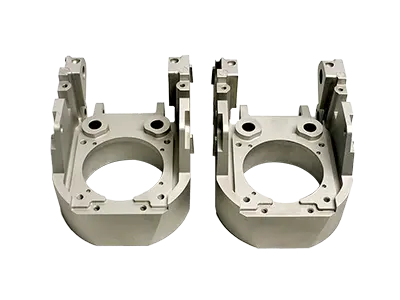

Industrial machinery rarely fails because every component suddenly reaches the end of its service life at the same time. More often, one shaft, bushing, bracket, gear, connector, housing, fastener, or other mechanical component needs to be replaced while the rest of the machine remains in operation.
This creates a very different manufacturing requirement from producing a completely new machine.
The replacement part may need to fit an existing assembly, match an older drawing, reproduce a discontinued component, or be manufactured in a relatively small quantity. In some cases, the original supplier is no longer available. In others, the equipment has been operating for years and the engineering documentation is incomplete.
CNC machining can provide a practical solution for these situations because manufacturers can produce custom replacement components directly from engineering drawings, CAD files, measurements, or reverse-engineering data.
GC INDUS provides precision machining and custom manufacturing services for industrial equipment, including gears, shafts, housings, brackets, connectors, fasteners, pumps, valves, and other mechanical components. Its manufacturing capabilities cover CNC machining, turning, Swiss lathe machining, forging, casting, sheet metal fabrication, surface treatment, and related processes.
This guide explains how equipment manufacturers, maintenance teams, distributors, and procurement departments can approach CNC machined replacement parts—from identifying the component and recovering its specifications to selecting materials, manufacturing processes, inspection requirements, and production quantities.
1. Why Replacement Parts Are Different from New Production Parts
A replacement component has to work within an existing mechanical system.
That means the manufacturer cannot evaluate the part only as an independent piece of metal.
The replacement part may need to match:
- Existing mating components
- Shaft or bearing dimensions
- Hole patterns
- Thread specifications
- Gear interfaces
- Sealing surfaces
- Mounting positions
- Overall assembly dimensions
- Existing material characteristics
- Surface treatment
- Functional clearances
For example, replacing a machine shaft is not simply a matter of producing a shaft with the same overall length.
The replacement may also need to match bearing seats, keyways, threads, coupling interfaces, runout requirements, and other mating features.
This is why replacement-part manufacturing usually starts with part identification and specification recovery before machining begins.
2. Common CNC Replacement Parts for Industrial Machinery
Industrial equipment contains hundreds or thousands of individual mechanical components.
Some of the most common replacement parts include:
Shafts
Shafts are frequently replaced because of wear, fatigue, corrosion, or mechanical damage.
Typical features include:
- Bearing seats
- Keyways
- Threads
- Shoulders
- Grooves
- Splines
- Coupling interfaces
GC INDUS provides CNC turning services for cylindrical and rotational components such as shafts, bushings, threaded parts, and other precision turned components.
Bushings
Bushings are often relatively simple geometrically but can be highly functional.
Their performance may depend on:
- Inside diameter
- Outside diameter
- Wall thickness
- Concentricity
- Surface finish
- Material
- Clearance with the mating shaft
Gears
Industrial machinery may use spur gears, helical gears, timing components, and other transmission components.
A replacement gear may require accurate control of:
- Bore
- Outside diameter
- Tooth geometry
- Keyway
- Face width
- Gear alignment
- Material hardness
Brackets and Mounting Components
Machine brackets may be used to support:
- Motors
- Sensors
- Bearings
- Actuators
- Cables
- Covers
- Pneumatic components
These parts can often be manufactured using CNC milling or sheet metal fabrication depending on geometry and production volume.
For larger fabricated structures, GC INDUS also provides sheet metal fabrication, including cutting, bending, welding, stamping, finishing, and assembly.
Housings
Housings can contain multiple functional interfaces, including:
- Bearing bores
- Mounting holes
- Threaded holes
- Sealing surfaces
- Internal pockets
- Alignment features
Complex housings may require 4-axis or 5-axis CNC machining depending on their geometry.
3. What Information Is Needed to Reproduce a Replacement Part?
The ideal starting point is an up-to-date 2D drawing and 3D CAD model.
However, that is not always available.
Replacement-part projects commonly fall into four situations.
Situation 1: Complete Drawing and CAD Model Available
This is the simplest scenario.
The manufacturer can review:
- Material
- Dimensions
- Tolerances
- GD&T
- Surface finish
- Threads
- Heat treatment
- Surface treatment
- Quantity
The production process can then be developed directly from the engineering information.
Situation 2: CAD Model Available but No Drawing
A 3D model provides the geometry, but it may not communicate every manufacturing requirement.
Important information can be missing, such as:
- Critical tolerances
- Surface roughness
- Thread specifications
- Material
- Heat treatment
- Inspection requirements
In this situation, the customer should identify which features are functionally critical.
Situation 3: 2D Drawing Available but No 3D Model
A detailed engineering drawing may still be sufficient for production.
The manufacturer can create the machining process based on the drawing and use CAM software to generate the required toolpaths.
Situation 4: No Drawing Available
This is more challenging, but replacement manufacturing may still be possible.
The original part can be measured using:
- Calipers
- Micrometers
- Height gauges
- Thread gauges
- Optical measurement
- CMM inspection
The resulting measurements can then be used to recreate the geometry.
4. Reverse Engineering for Discontinued Components
Some industrial machines have been operating for ten or twenty years.
The original component may have been discontinued.
The original supplier may have:
- Closed the business
- Changed the product
- Discontinued the part
- Lost the original drawing
- Changed material specifications
- Changed production locations
In such cases, reverse engineering can help recover the geometry of the existing component.
The process may include:
- Inspect the original component.
- Measure critical dimensions.
- Identify material where possible.
- Determine functional interfaces.
- Create a CAD model.
- Reconstruct the drawing.
- Review manufacturing feasibility.
- Produce a prototype.
- Validate the fit.
- Release the replacement part for production.
Reverse engineering should not mean simply copying every visible dimension.
The engineering team should also identify which features determine the part’s function.
5. Material Identification Is Critical
A replacement part made from the wrong material can look identical and still fail in service.
Material selection should consider:
- Mechanical load
- Wear
- Corrosion
- Temperature
- Friction
- Weight
- Chemical exposure
- Required hardness
- Surface treatment
- Original equipment requirements
GC INDUS supports a broad range of metals and engineering plastics, including aluminum, stainless steel, carbon steel, alloy steel, titanium, brass, copper, POM, nylon, PTFE, PEEK, and other materials.
For replacement components, the original material specification should be used whenever it is known.
If the original material is unavailable, an engineering review may be necessary to identify a suitable alternative.
6. Common Materials for Industrial Replacement Parts
Aluminum
Aluminum is useful for:
- Housings
- Brackets
- Covers
- Mounting plates
- Lightweight structural components
Its low density can be valuable when reducing equipment weight.
Stainless Steel
Stainless steel is often selected for components exposed to:
- Moisture
- Chemicals
- Outdoor environments
- Food-processing environments
- Corrosive fluids
Grades such as 303, 304, 316, and 17-4 PH have different properties and should not be treated as interchangeable.
Carbon Steel
Carbon steel can be suitable for:
- Shafts
- Pins
- Structural components
- Mechanical parts
- Fasteners
Additional heat treatment or surface treatment may be required depending on application.
Alloy Steel
Alloy steels are often selected where higher strength, fatigue resistance, or hardness is required.
Brass and Copper
Brass and copper can be useful for:
- Bushings
- Connectors
- Electrical components
- Fluid fittings
- Special-purpose mechanical components
7. Choosing Between CNC Machining and Other Processes
CNC machining is not always the only possible manufacturing route.
The best process depends on:
- Quantity
- Geometry
- Material
- Dimensional requirements
- Tooling budget
- Production frequency
- Required lead time
For prototypes and small batches, CNC machining can often avoid the upfront tooling requirements associated with some forming and casting processes.
For high-volume replacement programs, however, other processes may become economically attractive.
GC INDUS provides multiple manufacturing routes, including cold forging, die casting, and precision casting.
This allows the manufacturing process to be evaluated according to the actual production requirement rather than forcing every component into CNC machining.
8. When CNC Turning Is the Right Choice
CNC turning is particularly suitable for rotational components.
Typical replacement parts include:
- Shafts
- Bushings
- Pins
- Rollers
- Spacers
- Threaded fittings
- Plugs
- Cylindrical housings
Modern turning centers can combine turning with drilling, boring, threading, grooving, and other operations.
For more complex rotational components, turn-mill capabilities can reduce the number of separate setups.
This can be useful when a replacement part combines cylindrical geometry with:
- Cross holes
- Flats
- Slots
- Milling features
- Off-center holes
9. When CNC Milling Is More Suitable
CNC milling is generally better suited to parts with:
- Flat surfaces
- Pockets
- Slots
- Complex profiles
- Multiple mounting holes
- Irregular shapes
- Machined faces
Typical replacement components include:
- Mounting brackets
- Machine plates
- Sensor mounts
- Motor adapters
- Housings
- Clamps
- Structural components
For complex multi-sided components, 5-axis CNC machining can provide access to multiple surfaces with fewer repositioning operations.
10. Small Replacement Parts May Need Swiss Machining
Industrial equipment can contain very small precision components.
Examples include:
- Small pins
- Micro shafts
- Connectors
- Precision spacers
- Small threaded components
- Miniature bushings
For these applications, Swiss lathe machining can be considered when the component diameter, geometry, and production requirements fit the process. GC INDUS identifies automation, medical, automotive, and precision instruments among applications for Swiss machining.
11. Don’t Automatically Reproduce Every Old Specification
A replacement part creates an opportunity to review the original design.
Some old components may contain:
- Unnecessarily tight tolerances
- Obsolete materials
- Difficult-to-source finishes
- Inefficient manufacturing features
- Outdated thread standards
- Excessive machining requirements
However, changing the specification should never be done casually.
The manufacturer should distinguish between:
Functional requirements
and
historical manufacturing requirements.
For example, if an old drawing specifies a very tight tolerance but the feature has no functional reason for that tolerance, an engineering discussion may identify a more practical specification.
GC INDUS provides DFM support to review manufacturability and identify opportunities to improve production efficiency.
12. Surface Treatment for Replacement Parts
The replacement part should not only match the geometry.
Its surface condition may also need to match the original component.
Possible treatments include:
- Anodizing
- Plating
- Passivation
- Powder coating
- Electropolishing
- Black oxide
- PVD
- Heat treatment
- Other protective coatings
GC INDUS provides a range of surface treatment services and evaluates finishing according to material, environmental conditions, and functional requirements.
For example, a steel shaft operating in a corrosive environment may require a protective surface treatment.
An aluminum housing may require anodizing.
A stainless-steel component may require passivation or polishing depending on the application.
13. Threads and Mating Interfaces
One of the easiest ways to create a replacement-part failure is to reproduce the overall shape while missing a mating specification.
Threads should be clearly identified.
Examples include:
- Metric threads
- UNC
- UNF
- NPT
- BSP
- Trapezoidal threads
- Special threads
The drawing should specify:
- Thread diameter
- Pitch
- Standard
- Class/tolerance
- Thread depth
- Internal or external thread
For replacement components, the mating component should also be checked where possible.
14. Inspection Should Match the Functional Risk
Not every replacement component needs the same inspection program.
A simple spacer may require basic dimensional inspection.
A critical shaft may require more detailed verification.
Possible inspection methods include:
- Calipers
- Micrometers
- Height gauges
- Pin gauges
- Thread gauges
- Optical measurement
- CMM
- Surface roughness measurement
- Material verification
GC INDUS describes its quality workflow as including material certification, first-article inspection, in-process checks, and final validation.
For demanding replacement parts, inspection documentation may include:
- Inspection reports
- Material certificates
- Certificate of Conformance
- Heat-treatment records
- Surface-treatment records
- Traceability information
15. Prototype First, Then Production
For a replacement component with uncertain specifications, producing one or several prototypes before releasing a larger batch can reduce risk.
A prototype can be checked for:
- Physical fit
- Assembly
- Clearance
- Movement
- Sealing
- Alignment
- Interference
- Functional performance
After the first article is validated, production quantities can be increased.
This approach is especially useful when the original drawing is incomplete or when the component has been reverse engineered.
GC INDUS supports prototype-to-production manufacturing and states that its precision machining operations can support both prototypes and larger production programs.
16. Small-Batch Replacement Parts
Many industrial replacement-part orders are not high-volume.
A customer may need:
- 5 pieces
- 10 pieces
- 25 pieces
- 50 pieces
- 100 pieces
The requirement may be driven by maintenance schedules or spare-parts inventory rather than mass production.
CNC machining is well suited to these situations because the process can produce custom components without requiring the same type of dedicated tooling associated with some high-volume manufacturing processes.
The supplier should understand whether the order is:
- One-time replacement
- Recurring spare-part requirement
- Emergency replacement
- Scheduled maintenance stock
- Long-term production component
This information can influence process planning and pricing.
17. Recurring Spare Parts Require More Than One Good Batch
If a replacement component will be ordered repeatedly, consistency becomes particularly important.
The supplier should maintain:
- Revision-controlled drawings
- Approved material specifications
- Production process records
- Inspection requirements
- Surface-treatment specifications
- Quality records
This reduces the risk that the same part will be produced differently six months later.
For recurring orders, procurement teams should also discuss:
- Annual quantity
- Forecast
- Safety stock
- Lead time
- Packaging
- Part identification
- Revision control
18. Custom Fasteners Are Often Overlooked
Industrial equipment frequently contains proprietary fasteners that are difficult to replace with standard hardware.
Examples include:
- Special screws
- Custom bolts
- Pins
- Studs
- Special nuts
- Threaded inserts
- Retaining components
GC INDUS provides custom fastener manufacturing for bolts, screws, nuts, studs, pins, rivets, washers, threaded inserts, and specialty fastening components.
Custom fasteners can be manufactured through combinations of CNC machining, cold heading, thread rolling, stamping, heat treatment, and finishing depending on design and production volume.
19. Fixtures and Jigs for Repeat Replacement Production
If a replacement component will be produced repeatedly, dedicated fixtures may improve production consistency.
Fixtures can help:
- Position the workpiece
- Reduce setup time
- Improve repeatability
- Support automated loading
- Protect finished surfaces
- Simplify inspection
GC INDUS provides custom fixtures and jigs for manufacturing applications.
The appropriate fixture strategy depends on production volume and part geometry.
For one-off replacement components, a dedicated fixture may not be justified.
For recurring production, it may become worthwhile.
20. Replacement Parts for Different Machinery Industries
Packaging Machinery
Packaging equipment frequently requires:
- Shafts
- Rollers
- Bushings
- Guides
- Brackets
- Clamps
- Custom fasteners
- Sensor mounts
Because packaging equipment often contains many moving components, replacement parts may be required throughout the machine’s operating life.
Automation Equipment
Automation systems may contain:
- Actuator components
- Motor mounts
- Drive shafts
- Sensor brackets
- Precision gears
- Gripper components
- Machine frames
GC INDUS identifies industrial automation and robotics among the industries served by its precision machining operations.
Energy Equipment
Energy systems can require:
- Shafts
- Flanges
- Valve components
- Pump components
- Sealing rings
- Connectors
- Structural parts
Automotive Equipment
Production machinery used in automotive manufacturing can contain large numbers of replacement mechanical components.
These may include:
- Fixtures
- Shafts
- Bushings
- Brackets
- Housings
- Custom fasteners
- Tooling components
21. A Practical Replacement-Part Sourcing Workflow
A repeatable workflow can make replacement-part procurement much easier.
Step 1: Identify the Part
Record:
- Part number
- Machine model
- Equipment manufacturer
- Current condition
- Quantity required
Step 2: Collect Available Documentation
Gather:
- 2D drawing
- 3D CAD
- Photos
- Previous purchase records
- Material certificate
- Inspection report
Step 3: Identify Critical Interfaces
Determine which features must match the existing machine.
Step 4: Confirm Material
Use the original specification where available.
Step 5: Select the Manufacturing Process
Compare:
- CNC machining
- Turning
- Swiss machining
- Forging
- Casting
- Sheet metal
- Other processes
Step 6: Produce a Prototype
For uncertain parts, validate one or several pieces before full production.
Step 7: Inspect
Focus inspection on functional dimensions and customer-defined requirements.
Step 8: Approve Production
Once the replacement part is validated, establish the production and quality requirements for recurring orders.
22. What to Include in a Replacement-Part RFQ
When contacting a CNC manufacturer, provide as much information as possible.
A useful RFQ package includes:
Part information
- Part name
- Part number
- Revision
- Application
Technical information
- 2D drawing
- 3D CAD
- Material
- Critical tolerances
- Surface finish
- Threads
- Heat treatment
- Surface treatment
Commercial information
- Prototype quantity
- Production quantity
- Annual forecast
- Target delivery date
- Packaging requirements
Quality information
- Inspection requirements
- Material certificate
- FAI
- CoC
- Traceability requirements
If some information is missing, explain what is unavailable.
A manufacturer can then identify what needs to be clarified before production.
23. How GC INDUS Supports Replacement-Part Manufacturing
GC INDUS provides a broad manufacturing platform for custom mechanical components.
Its current capabilities include:
- CNC machining
- CNC turning
- 5-axis machining
- Swiss lathe machining
- Sheet metal fabrication
- Cold forging
- Die casting
- Precision casting
- Surface treatment
- Custom fasteners
- Fixtures and jigs
- Inspection
Its precision machining operation reports more than 80 CNC machines, more than 65 material options, prototype-to-production capability, and inspection processes including material certification, FAI, in-process inspection, and final validation.
The company also states that its engineering team supports projects from CAD review through production and can provide quotations based on drawings, materials, quantities, and other project requirements.
This combination can be useful when a replacement-part project requires more than one manufacturing process.
24. Replacement Parts vs. New Machine Components
There is an important difference between manufacturing a replacement part and manufacturing a new component.
For a new component, the engineering team can modify the surrounding system if necessary.
For a replacement component, the surrounding system already exists.
Therefore, the replacement part must usually respect existing interfaces.
This makes the following information particularly important:
- Existing mating parts
- Assembly dimensions
- Installation orientation
- Clearance
- Fastening method
- Operating conditions
- Existing material
- Wear condition
The more information the manufacturer has about the existing assembly, the easier it becomes to identify potential problems before production.
25. Final Checklist for Industrial Replacement Parts
Before sending a replacement-part project to a CNC manufacturer, review the following:
| Item | Check |
|---|---|
| Part number | Correct and revision-controlled |
| CAD | STEP/STP or other suitable model available |
| Drawing | Latest revision available |
| Material | Exact grade identified |
| Tolerance | Critical dimensions identified |
| Threads | Standard, size, pitch and depth specified |
| Surface finish | Functional requirements defined |
| Heat treatment | Required process specified |
| Surface treatment | Required coating or treatment defined |
| Quantity | Prototype and production quantities provided |
| Application | Operating environment explained |
| Mating parts | Important interfaces identified |
| Inspection | Required measurement and documentation defined |
| Packaging | Protection requirements identified |
| Delivery | Required date or lead time provided |
Frequently Asked Questions
1. Can CNC machining reproduce discontinued industrial parts?
Yes. If a suitable drawing or CAD model is available, CNC machining can reproduce many discontinued components. If documentation is unavailable, measurements and reverse engineering may be used to reconstruct the part.
2. What industrial parts are commonly replaced through CNC machining?
Common examples include shafts, bushings, gears, brackets, housings, pins, fittings, connectors, mounting plates, custom fasteners, and actuator components.
3. Can I order only a few replacement parts?
Yes. CNC machining is suitable for prototypes and small-batch production, although the most appropriate process depends on geometry, material, quantity, and tolerance requirements.
4. What if I only have a physical sample?
A physical sample can provide useful information for reverse engineering. Measurements can be taken to reconstruct dimensions and critical interfaces. Material identification may also be required.
5. Should the replacement part use exactly the same material as the original?
When the original material specification is known and remains appropriate for the application, matching it is generally the safest starting point. If the original material is unavailable, an engineering evaluation should be performed before changing it.
6. Can an old drawing be improved for modern manufacturing?
Potentially. A manufacturer can identify features that may be difficult or unnecessarily expensive to produce. However, functional requirements should be preserved and engineering changes should be reviewed before implementation.
7. Can GC INDUS manufacture recurring spare parts?
Yes. GC INDUS supports prototype and production manufacturing and can provide CNC machining, turning, finishing, inspection, custom fasteners, and other related services.
8. What should I send for a replacement-part quotation?
Ideally send the 2D drawing, 3D CAD file, material, quantity, critical tolerances, surface treatment, inspection requirements, and delivery target. If the drawing is unavailable, send clear photos, measurements, and information about the machine and application.
Conclusion
Industrial machinery depends on replacement components that fit existing assemblies and continue to perform under real operating conditions.
The challenge is not simply reproducing the visible shape of an old component.
A successful replacement-part project requires the manufacturer to understand the component’s interfaces, material, functional dimensions, surface requirements, operating environment, production quantity, and inspection needs.
For a simple replacement shaft, CNC turning may be sufficient. A complex housing may require multi-axis milling. A small precision component may be better suited to Swiss machining. High-volume fasteners may justify cold forging, while complex near-net-shape components may benefit from precision casting or die casting followed by CNC machining.
The right manufacturing process therefore depends on the actual part and production requirement.
For companies maintaining industrial machinery, the most efficient approach is to provide the manufacturer with all available engineering information—even if the documentation is incomplete. Drawings, CAD models, photographs, physical samples, measurements, previous inspection reports, and material information can all help engineers reconstruct the manufacturing requirements.
GC INDUS supports custom industrial components from prototype and replacement parts through recurring production, with CNC machining, turning, Swiss machining, casting, forging, sheet metal fabrication, surface treatment, custom fasteners, fixtures, and inspection available across different project requirements.
If you need to reproduce a discontinued machine component, manufacture a small batch of spare parts, or establish a recurring supply of custom replacement components, send your available drawings, CAD files, photos, or sample information for engineering review.
Start a replacement-part project with GC INDUS:
Request a Quote


