
Book Appointment Now

GC INDUS / MANUFACTURING KNOWLEDGE
How to Source Precision Machined Parts for Mechanical Equipment Manufacturers
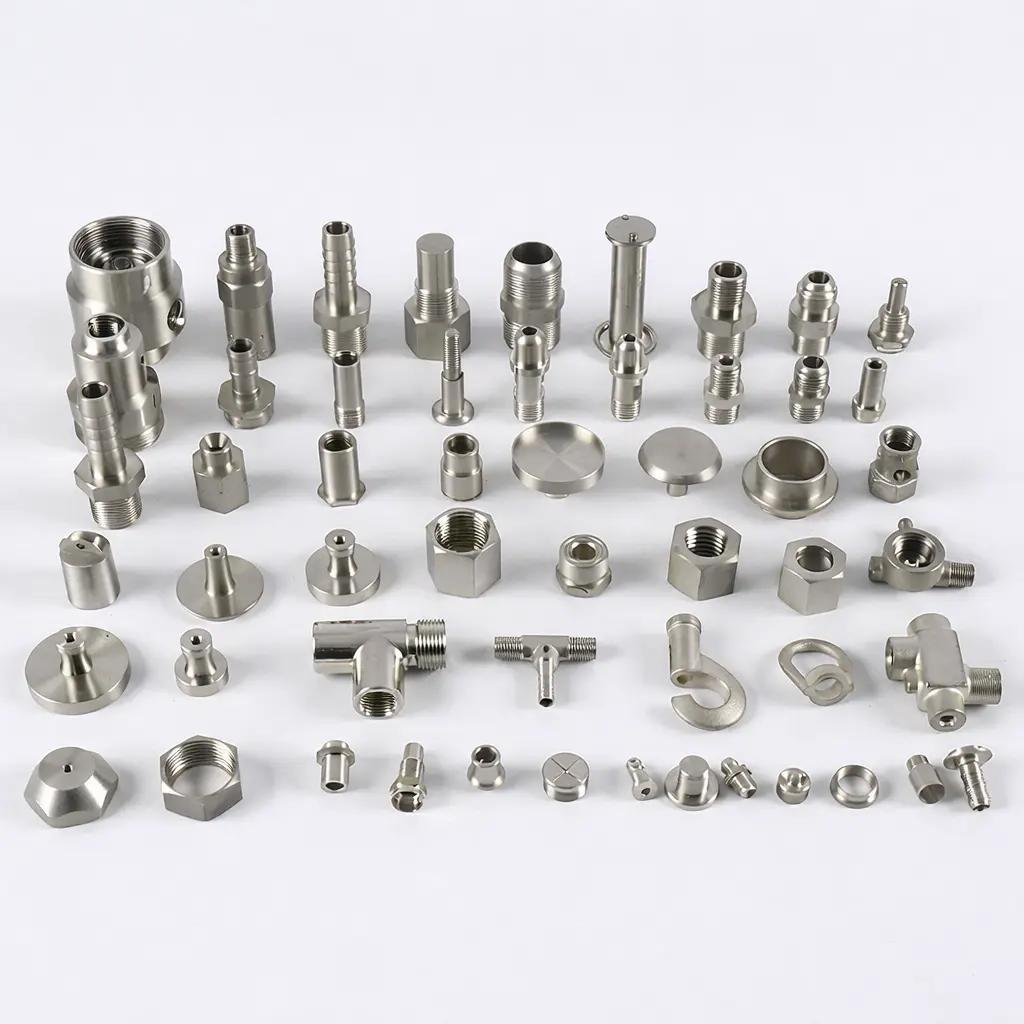

Mechanical equipment manufacturers rarely need just one type of component.
A single machine may contain shafts, housings, brackets, flanges, gears, bushings, pins, couplings, mounting plates, fixtures, covers, and other custom mechanical parts. Although these components may appear relatively simple individually, their dimensional relationships, material properties, surface conditions, and assembly interfaces can directly affect the performance of the finished machine.
For engineering and procurement teams, sourcing these components is therefore more than finding a supplier that owns CNC machines. The manufacturing partner needs to understand the drawing, identify functional requirements, select an appropriate process, control material and tolerances, and provide consistent inspection and delivery.
GC INDUS provides precision machining services for custom metal and engineering-plastic components, supporting prototype development through production. Its capabilities include CNC milling, turning, multi-axis machining, Swiss machining, casting, sheet metal, molding, forging, finishing, inspection, and coordinated manufacturing support.
This guide explains the major factors mechanical equipment manufacturers should consider when sourcing precision machined parts.
1. Why Precision Machined Parts Matter in Mechanical Equipment
Mechanical equipment is usually an assembly of interconnected components.
A shaft interacts with bearings.
A housing supports the shaft.
A bracket fixes the housing to the machine frame.
A coupling transfers motion.
A fixture establishes the position of another component.
When one component is outside its required specification, the problem may not appear in that component alone. It can affect the entire assembly.
For example, an incorrectly positioned mounting hole can make assembly difficult. An oversized bearing bore can affect the fit between the bearing and housing. Excessive runout on a shaft can create vibration. A poor surface finish can increase friction or accelerate wear.
This is why precision machining should be considered as part of the overall equipment design rather than simply a material-removal process.
GC INDUS describes its CNC machining capability as covering 3-, 4-, and 5-axis machining, milling, turning, drilling, and tapping for complex metal and engineering-plastic components.
2. Common Precision Parts Used by Mechanical Equipment Manufacturers
Mechanical equipment manufacturers commonly source several categories of custom components.
Shafts
Shafts transmit rotation or support rotating assemblies.
Typical requirements include:
- Controlled diameters
- Concentricity
- Straightness
- Surface finish
- Keyways
- Threads
- Bearing seats
Depending on the geometry and quantity, CNC turning or mill-turn machining may be appropriate.
GC INDUS provides CNC turning for cylindrical and rotational components including shafts, threaded parts, couplings, and other precision turned components.
Housings
Housings can support bearings, motors, gears, sensors, valves, or other internal components.
A housing may require:
- Precision bores
- Flat mounting surfaces
- Threaded holes
- Internal pockets
- Sealing surfaces
- Alignment features
Complex housings are often well suited to CNC milling because multiple features can be produced directly from CAD data.
Brackets
Brackets connect components to the main machine structure.
They may need:
- Accurate hole locations
- Flat reference surfaces
- Controlled angles
- Lightweight construction
- Structural stiffness
Aluminum is often considered for lightweight brackets, while steel or stainless steel may be selected when greater strength or environmental resistance is required.
Bushings and Spacers
Bushings and spacers are relatively small components, but their dimensions can be critical.
A bushing may need a controlled inner diameter and outer diameter.
A spacer may determine the axial position of another component.
For these parts, repeatability is often more important than complex geometry.
Flanges and Adapters
Flanges connect pipes, shafts, housings, motors, pumps, or other assemblies.
Their important features can include:
- Bolt-hole patterns
- Flatness
- Bore dimensions
- Concentricity
- Sealing faces
- Thread specifications
3. Start with the Equipment Function
Before selecting a manufacturing process, understand how the component functions inside the machine.
Ask:
- What does the part support?
- What components contact it?
- Does it transmit force or motion?
- Does it rotate?
- Is it exposed to vibration?
- Is it exposed to heat, moisture, oil, or chemicals?
- Does it need to maintain alignment?
- Is it a wear component?
- How many parts are required?
These questions help determine whether the part needs high strength, corrosion resistance, low friction, dimensional stability, or another property.
The correct manufacturing process should then be selected around those requirements.
4. Material Selection Should Follow Performance Requirements
Material selection has a direct effect on machining cost and component performance.
GC INDUS lists aluminum, steel, stainless steel, titanium, brass, copper, and engineering plastics among its supported material options.
Aluminum
Aluminum is often selected when manufacturers need:
- Low weight
- Good machinability
- Corrosion resistance
- Good strength-to-weight ratio
Common applications include brackets, housings, mounting plates, covers, and structural components.
Stainless Steel
Stainless steel may be appropriate when corrosion resistance and durability are important.
Typical applications include:
- Fluid-handling equipment
- Food-processing machinery
- Chemical equipment
- Outdoor equipment
- Pump components
- Valve components
Carbon Steel
Carbon steel can be useful for components where strength and cost are important.
It may be used for:
- Shafts
- Structural components
- Fixtures
- Brackets
- Mechanical transmission components
Titanium
Titanium can be considered when high strength-to-weight performance or corrosion resistance is important.
However, titanium generally requires more careful machining strategies than common aluminum alloys.
Engineering Plastics
Engineering plastics such as POM, PEEK, nylon, and PTFE may be suitable when the application requires:
- Low friction
- Electrical insulation
- Low weight
- Chemical resistance
- Non-metallic construction
GC INDUS provides a dedicated material options resource covering metals and engineering plastics for different applications.
5. Machinability Is Part of Material Selection
Material price is only one part of the cost.
A material that is inexpensive to purchase may require significantly more machining time or tooling.
Machinability can affect:
- Cutting speed
- Feed rate
- Tool life
- Cycle time
- Surface finish
- Chip control
- Secondary operations
For example, some stainless steels can work-harden during machining, requiring careful cutting parameters and tooling.
Titanium can also require controlled cutting conditions because of heat generation and tool wear.
GC INDUS’s material-selection guide explains that material hardness, machinability, tooling requirements, surface finish, and tolerance requirements should be considered together rather than selecting a material based only on raw material cost.
6. Choosing CNC Milling for Complex Mechanical Parts
CNC milling is appropriate for many mechanical components with:
- Flat surfaces
- Pockets
- Slots
- Holes
- Contoured surfaces
- Threaded features
- Multiple mounting faces
Examples include:
- Machine brackets
- Motor mounts
- Gear housings
- Fixture plates
- Structural blocks
- Valve bodies
- Pump components
For more complex geometries, 4-axis or 5-axis machining may reduce repositioning and improve access to multiple surfaces.
GC INDUS states that its 5-axis capability can reduce repositioning and support complex multi-surface components.
7. When CNC Turning Is the Better Choice
CNC turning is generally suited to rotational components.
Typical examples include:
- Shafts
- Pins
- Bushings
- Sleeves
- Spacers
- Threaded adapters
- Cylindrical housings
The workpiece rotates while cutting tools remove material to create cylindrical features.
Modern turning centers can also combine milling operations, allowing manufacturers to add holes, flats, slots, and other features to turned components.
GC INDUS supports both prototype and production CNC turning and describes applications across automation, energy, electronics, aerospace, and other industries.
8. When Swiss Machining Makes Sense
Mechanical equipment often includes small precision components.
Examples include:
- Small shafts
- Pins
- Bushings
- Connectors
- Precision sleeves
- Small threaded components
For long, slender, or small-diameter parts, Swiss-type machining can provide stable support close to the cutting area.
GC INDUS provides Swiss CNC machining for micro-precision components and lists applications involving brass, aluminum, stainless steel, titanium, PEEK, and other materials.
Swiss machining can be particularly useful when a component contains multiple small features and production quantities justify an automated bar-fed process.
9. When 5-Axis Machining Is Worth Considering
Not every mechanical component needs 5-axis machining.
However, it can be useful when the part contains:
- Multiple angled surfaces
- Complex contours
- Deep features
- Undercuts
- Multi-face machining requirements
- Difficult-to-access surfaces
The major benefit is not simply the number of axes.
The real consideration is whether fewer setups can improve the relationship between critical features.
Every time a component is repositioned, there is another opportunity for workholding variation or alignment error.
A suitable 5-axis strategy can reduce some of these setup requirements.
GC INDUS provides 5-axis CNC machining for complex precision components and identifies reduced repositioning, improved surface finish, and complex multi-angle machining among its potential benefits.
10. Tolerances Should Be Based on Function
A common mistake in mechanical-part sourcing is specifying extremely tight tolerances on every dimension.
Tighter tolerances can increase:
- Machining time
- Tooling requirements
- Inspection time
- Scrap risk
- Production cost
Instead, identify the dimensions that actually control the function of the assembly.
Examples include:
- Bearing bores
- Shaft diameters
- Locating holes
- Mounting surfaces
- Gear interfaces
- Sealing surfaces
- Alignment features
GC INDUS’s CNC machining tolerance guide explains how tolerance, accuracy, repeatability, machine capability, tooling, workholding, and thermal conditions influence machining results.
For drawings with complex geometric relationships, GD&T can communicate functional requirements more clearly than relying only on general dimensional tolerances.
11. Datum Structure and Assembly Alignment
Mechanical equipment often contains multiple components that must align.
For example, a motor housing may need to align with:
- A coupling
- A shaft
- A bearing
- A mounting plate
If the drawing does not clearly establish which surfaces or features control alignment, different interpretations can occur during manufacturing and inspection.
A well-structured datum system helps define the functional relationship between features.
This is especially important for:
- Bearing housings
- Gearboxes
- Precision fixtures
- Linear-motion assemblies
- Pump components
- Valve components
12. Surface Finish Can Affect Performance
Surface finish is not purely cosmetic.
A surface that interacts with another component may need a specific roughness level to control:
- Friction
- Wear
- Sealing
- Sliding performance
- Bearing performance
- Coating adhesion
For example, a shaft running through a seal may need a different surface specification from an external machine bracket.
Therefore, surface-finish requirements should be applied according to function.
GC INDUS offers surface treatment options for machined components, including processes that can improve corrosion resistance, appearance, wear resistance, or other surface characteristics.
13. Secondary Operations May Be Necessary
CNC machining is not always the final operation.
Depending on the component, additional processes may include:
- Grinding
- Heat treatment
- Anodizing
- Passivation
- Plating
- Powder coating
- Polishing
- Electropolishing
For precision cylindrical features, grinding may be used when the drawing requires a surface or dimensional condition beyond conventional machining.
For example, centerless grinding may be considered for appropriate cylindrical components.
The key is to identify secondary operations during the quotation stage.
14. Threads and Fasteners Need Special Attention
Threads are among the most common features in mechanical equipment.
They can be used for:
- Assembly
- Adjustment
- Clamping
- Fluid connections
- Covers
- Mounting
The drawing should specify:
- Thread standard
- Thread size
- Pitch
- Internal or external thread
- Thread depth
- Class or tolerance
- Surface treatment requirements
If the component will be repeatedly assembled and disassembled, thread durability should also be considered.
For high-volume threaded hardware, alternative processes such as cold forging may be worth evaluating instead of machining every feature from bar stock.
15. Gears and Transmission Components
Mechanical equipment frequently contains motion-transfer components.
Examples include:
- Gears
- Shafts
- Couplings
- Pulleys
- Sprockets
- Drive components
Gear-related parts require careful consideration of tooth geometry, material, hardness, surface condition, and dimensional accuracy.
For appropriate gear designs, specialized processes such as gear hobbing may be considered.
CNC machining may still be used for supporting features such as:
- Bores
- Keyways
- Mounting faces
- Threads
- Reliefs
16. Fixtures and Jigs for Mechanical Equipment
Fixtures and jigs can be used during manufacturing, assembly, inspection, and operation.
A machining fixture may establish a repeatable datum.
An assembly fixture may position multiple components.
An inspection fixture may make measurement faster and more repeatable.
GC INDUS provides fixtures and jigs machining for custom applications.
A well-designed fixture can reduce setup time and help maintain repeatable part positioning.
17. Design for Manufacturability
A precision component should be designed not only to perform its function but also to be manufacturable.
Common DFM considerations include:
Tool Access
Can the cutting tool reach every required feature?
Internal Corners
Are the internal radii compatible with standard tooling?
Deep Cavities
Could excessive depth increase tool deflection or vibration?
Thin Walls
Could thin sections deform during machining?
Hole Depth
Is the required depth practical for drilling and chip evacuation?
Setup Requirements
Can the component be manufactured in a reasonable number of setups?
GC INDUS’s manufacturing workflow emphasizes reviewing geometry, material, tolerances, finishing requirements, and volume before production planning.
18. Prototype and Production Requirements Are Different
A prototype order and a production order may require different manufacturing strategies.
Prototype
The priorities may be:
- Fast development
- Design validation
- Dimensional verification
- Low quantity
CNC machining can be useful because it avoids the need for production tooling in many cases.
Production
Production introduces additional considerations:
- Cycle time
- Tool life
- Repeatability
- Material availability
- Process control
- Inspection
- Packaging
- Delivery capacity
For larger production quantities, alternative processes such as die casting, investment casting, molding, or cold forging may become relevant.
GC INDUS supports multiple manufacturing processes, allowing the production route to be considered alongside quantity and geometry.
19. Quantity Changes the Economics
Always include quantity in an RFQ.
The difference between 10 pieces and 10,000 pieces can completely change the recommended manufacturing process.
For low quantities, CNC machining may offer flexibility.
For higher volumes, dedicated tooling or forming processes may reduce unit cost.
However, tooling cost, material utilization, cycle time, secondary operations, inspection, and logistics should all be considered when comparing processes.
A useful RFQ should include:
- Prototype quantity
- Initial production quantity
- Estimated annual volume
- Expected order frequency
20. Inspection Requirements Should Be Defined Early
Quality requirements should not be added after production begins.
Depending on the application, customers may require:
- Dimensional inspection
- First Article Inspection
- CMM measurement
- Material certificates
- Certificate of Conformance
- Surface-finish verification
- Thread inspection
- Traceability
GC INDUS describes quality controls including material verification, first article inspection, in-process checks, and final validation. Its metrology resources also cover CMM and optical measurement for demanding components.
If a component has a few critical dimensions, identify them clearly rather than simply requesting that every dimension receive the same inspection treatment.
21. Material Certification and Traceability
For many industrial applications, the customer may need evidence that the supplied material matches the specification.
Depending on the project, documentation can include:
- Material Test Report
- Heat number
- Material grade
- Certificate of Conformance
- Traceability records
These requirements should be communicated during quotation.
If a supplier discovers after production that specific certification is required, additional documentation may be difficult or impossible to reconstruct accurately.
22. Surface Treatment Should Be Specified Before Quotation
Surface treatment can influence both dimensions and cost.
Examples include:
- Anodizing
- Hard anodizing
- Passivation
- Electroless nickel
- Electroplating
- Powder coating
- Black oxide
- Polishing
- Electropolishing
Treatment thickness can affect:
- Thread fit
- Bearing fit
- Hole diameter
- Mating surfaces
For this reason, the supplier should know the required finish before the final process plan and quotation are prepared.
GC INDUS provides a dedicated surface treatment capability for custom components.
23. What a Good RFQ Package Should Include
A complete RFQ reduces clarification cycles.
Engineering Files
Provide:
- 3D CAD model
- 2D manufacturing drawing
- Revision number
- Material specification
- Surface treatment specification
Quantity
Include:
- Prototype quantity
- Production quantity
- Annual forecast if available
Quality
Specify:
- Critical dimensions
- General tolerances
- GD&T
- Inspection requirements
- Material certificates
- FAI requirements
- CoC requirements
Commercial Requirements
Include:
- Target delivery
- Destination
- Packaging requirements
- Incoterms when applicable
Application Information
If possible, explain:
- What the part does
- What it connects to
- Operating environment
- Load conditions
- Expected service life
This information gives the manufacturer enough context to evaluate the project rather than simply quote the drawing.
24. How to Compare Suppliers
Price is important, but it should not be the only comparison point.
When reviewing suppliers, consider:
Manufacturing Capability
Can the supplier produce the geometry and tolerance you require?
Material Capability
Can the supplier source the specified material and provide documentation?
Inspection
Can the supplier provide the required inspection method and records?
Process Range
Can the supplier recommend another manufacturing process if CNC machining is not the most appropriate option?
Production Capacity
Can the supplier support both prototype and production demand?
Engineering Communication
Can technical questions be resolved efficiently?
Delivery
Can the supplier coordinate production, finishing, inspection, packaging, and shipping?
GC INDUS presents itself as a multi-process manufacturing partner connecting drawing review, process planning, production, inspection, and delivery through one coordinated workflow.
25. Single-Source Manufacturing for Complex Equipment
A mechanical equipment manufacturer may need dozens or hundreds of different custom parts.
Using one manufacturing partner for several categories can reduce supplier coordination.
For example, the same project might require:
- CNC-machined housings
- Turned shafts
- Swiss-machined pins
- Sheet-metal covers
- Cast components
- Molded plastic parts
- Custom fixtures
A multi-process supplier can potentially coordinate these requirements through one engineering and quality workflow.
GC INDUS lists CNC machining, casting, sheet metal, molding, cold forging, finishing, inspection, assembly, and global delivery support among its manufacturing capabilities.
26. Cost Reduction Without Sacrificing Function
Cost reduction should begin with engineering rather than simply asking for a lower unit price.
Potential approaches include:
Optimize Tolerances
Use tight tolerances only where function requires them.
Simplify Setups
Design the component so more features can be machined from fewer orientations.
Standardize Threads
Use common thread standards where possible.
Reduce Deep Cavities
Avoid unnecessarily deep pockets that increase machining time.
Select Materials Rationally
Consider machinability, availability, strength, and environmental requirements.
Combine Processes
Some components can be produced using a combination of turning, milling, grinding, and finishing rather than forcing one process to perform every operation.
Plan for Volume
Tell the supplier your expected production volume so tooling and process options can be evaluated properly.
27. Frequently Asked Questions
1. What parts do mechanical equipment manufacturers commonly outsource?
Common outsourced components include shafts, housings, brackets, gears, bushings, pins, spacers, flanges, fixtures, mounting plates, couplings, and custom structural parts.
2. Which material is best for precision mechanical parts?
There is no universal material. Aluminum is often selected for lightweight components, stainless steel for corrosion resistance, steel for strength, titanium for high-performance applications, and engineering plastics for low-friction or insulating applications.
3. When should I use CNC turning instead of CNC milling?
CNC turning is generally suitable for cylindrical and rotational components such as shafts, pins, bushings, sleeves, and threaded adapters. Milling is generally more suitable for prismatic parts with pockets, slots, holes, and complex surfaces.
4. Do all mechanical parts require tight tolerances?
No. Tolerances should be related to function. Applying unnecessarily tight tolerances can increase machining and inspection costs without improving equipment performance.
5. When is 5-axis CNC machining useful?
5-axis machining can be useful for complex multi-face geometries, angled features, undercuts, and components where reducing the number of setups can benefit the manufacturing process.
6. What quality documents can be requested?
Depending on the project, customers may request material certificates, dimensional inspection reports, FAI documentation, CoC, surface-finish records, and traceability information.
7. Should surface treatment be included in the original RFQ?
Yes. Surface treatment can affect dimensions, cost, lead time, and final performance, so it should be specified before quotation whenever possible.
8. What should I send when requesting a quote?
A useful RFQ should include the CAD model, 2D drawing, material, quantity, tolerances, surface treatment, inspection requirements, delivery target, and application information.
Conclusion
Sourcing precision machined parts for mechanical equipment requires more than comparing machining prices.
The supplier needs to understand how each component functions inside the larger machine.
The key considerations are:
Function → Material → Geometry → Process → Tolerance → Surface Treatment → Inspection → Quantity
For cylindrical components, CNC turning or Swiss machining may be appropriate. For complex prismatic parts, CNC milling or 5-axis machining may be considered. For higher-volume components, casting, molding, forging, or other production processes may become more suitable.
The most effective RFQs provide enough technical and commercial information for the manufacturer to evaluate the complete manufacturing route.
GC INDUS supports mechanical equipment manufacturers with CNC machining, turning, Swiss machining, casting, sheet metal, molding, forging, surface treatment, inspection, and coordinated manufacturing support.
If you have a custom mechanical component that needs manufacturing, send the CAD model and drawing to the GC INDUS engineering team.


