
Book Appointment Now
Operating environment
Define this requirement in your drawing or specification so the engineering review has a clear starting point.

GC INDUS / ENGINEERED TO YOUR DRAWING
Compare metals and engineering plastics against function, environment and manufacturing requirements.
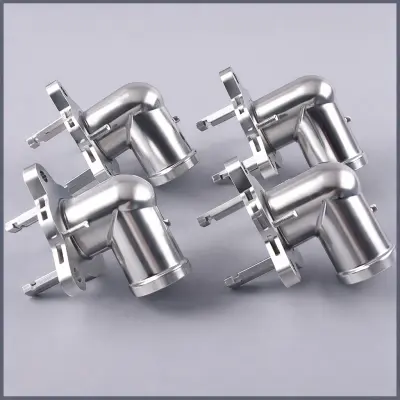
01 / ENGINEERING INTENT
A useful manufacturing decision connects function, geometry and inspection. Start with the requirements that matter to your part.
Define this requirement in your drawing or specification so the engineering review has a clear starting point.
Review its relationship with the selected process, material and production quantity.
Identify acceptance criteria and the information required for verification.
02 / PROCESS LOGIC
Explore the key stages. Select a step to follow the manufacturing route.
Identify mechanical, thermal, chemical and electrical requirements for the application.
Compare candidate grades using the properties relevant to the part.
Review machining, forming or molding suitability and any finishing constraints.
Specify the exact grade, condition and documentation requirements before ordering.
03 / MANUFACTURING IN DETAIL
04 / TECHNICAL LIBRARY
Explore Material Options by topic. Connect the process, materials and requirements before your engineering review.
Selecting the right material is essential for achieving the desired performance, durability, and cost efficiency of your components. At GC INDUS , we support a wide range of materials across different manufacturing processes, including precision machining, precision molding, and integrated manufacturing solutions .
Our engineering team works closely with customers to recommend the most suitable materials based on mechanical strength, corrosion resistance, weight, thermal performance, and application environment .
Precision machining supports a wide range of metals and engineering plastics that require high dimensional accuracy and tight tolerances. These materials are commonly used for components in industries such as automotive, aerospace, medical devices, robotics, and industrial equipment .
Aluminum alloys (6061, 7075)
Stainless steel (303, 304, 316)
These materials are ideal for producing high-precision parts such as gears, shafts, housings, connectors, brackets, and mechanical assemblies .
Precision molding processes such as plastic injection molding and die casting are suitable for producing high-volume components with consistent quality and complex geometries.
These materials are widely used in industries including electronics, consumer products, medical devices, and automotive components .
Molding materials provide excellent design flexibility, lightweight properties, and cost efficiency for large-scale production .
For complete manufacturing solutions, we combine different processes such as CNC machining , sheet metal fabrication , forging, casting, and assembly . Material selection depends on the structural and functional requirements of the final product.
Corrosion-resistant alloys
These materials are commonly used for industrial equipment, energy systems, robotics, aerospace structures, and automotive assemblies .
Start Your CNC Machining Project with the Right Materials
Aluminum alloys, Carbon steel, Stainless steel
High strength, durability, good machinability
Engine parts, shafts, brackets, housings
Titanium, Aluminum 7075, Stainless steel 304
Lightweight, high strength, corrosion resistance
corrosion resistanceStructural components, turbine parts, connectors
Stainless steel 316, Titanium, PEEK, POM, PMMA
Biocompatibility, corrosion resistance, high precision
Surgical tools, implants, medical device housings
conductivity, lightweight
Heat sinks, electronic enclosures, connectors
Aluminum alloys, Stainless steel
Precision, corrosion resistance
brackets, precision components
Stainless steel, Alloy steel, Nickel alloys, titanium
High temperature resistance, corrosion resistance
Valves, turbine components, pump parts, connectors
Balancing performance and cost is an important part of material selection. We help customers identify materials that meet technical requirements while minimizing overall production costs. This includes evaluating material price, machining efficiency, scrap rate, and production volume to recommend the most cost-effective solution. Our goal is to achieve the best balance between quality, functionality, and budget .
Different materials require specific surface treatments to enhance their performance and appearance. We evaluate how each material interacts with finishing processes such as anodizing, electroplating, powder coating, polishing, heat treatment, and passivation . Ensuring compatibility between materials and surface treatments helps improve corrosion resistance, wear resistance, durability, and aesthetic quality of the final components.
Not every material is suitable for every manufacturing process. Our engineers analyze the compatibility between the selected material and the required production method, including CNC machining , molding , casting , forging, and sheet metal fabrication . This assessment ensures the design can be produced efficiently, with stable quality and reasonable lead times, while avoiding unnecessary manufacturing challenges.
READY FOR ENGINEERING REVIEW
Share the model, material, quantity and critical requirements.
Start your project ↗


