
Book Appointment Now

GC INDUS / MANUFACTURING KNOWLEDGE
Understanding Batch Production vs. Continuous Manufacturing
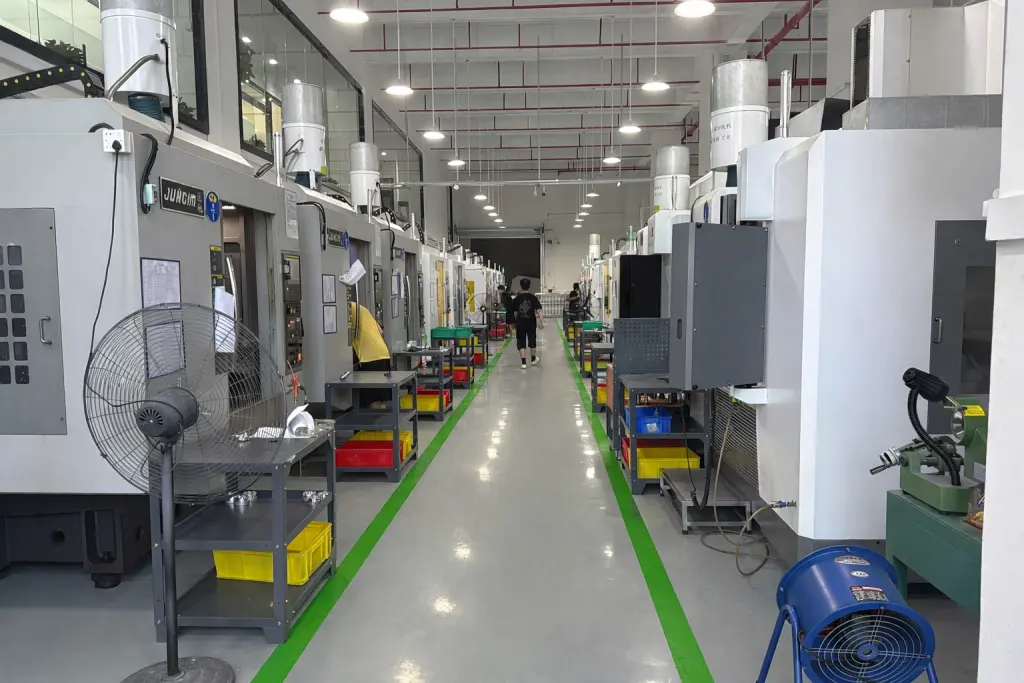
Batch production manufacturing costs are the combined expenses incurred when goods are made in discrete groups rather than in a continuous flow, covering setup, materials, labour, and inventory holding for each batch run. The key cost driver is the trade-off between setup frequency and inventory carrying costs: smaller batches reduce storage but increase changeover expenses, while larger batches do the opposite. Understanding this balance is essential for controlling unit costs and maintaining production flexibility.

What Are Batch Production Manufacturing Costs and How Does the Model Work?
Batch production groups identical units into a defined run, reconfigures equipment between runs, and repeats, unlike continuous flow, where the line never stops.
In continuous flow manufacturing, a single product runs indefinitely and setup costs are absorbed across millions of units. Batch production breaks that logic: each run carries its own setup cost, its own material call-off, and its own labour allocation. That structure makes batch production manufacturing costs fundamentally different to account for and control. For a foundational overview of how the model is defined in industry, see What is batch production in manufacturing? via OneAdvanced.
The four core cost categories are:
- Setup and changeover costs — incurred at the start of every batch run, regardless of run size
- Direct materials per batch — raw inputs called off specifically for each production run
- Direct labour per batch — operator time allocated from first piece to last
- Work-in-progress (WIP) inventory holding costs — the cost of batches sitting idle between production stages
Each category behaves differently as batch size changes, which is why batch sizing is a financial decision as much as a scheduling one.
The central tension is this: larger batches spread setup costs across more units, reducing cost per piece, but they also increase the volume of WIP sitting idle between stages, which raises holding costs. Every batch production decision lives inside that pull. There is no universally correct batch size; the right answer depends on setup duration, storage cost, and demand frequency.
The production cycle itself adds another cost layer. A batch moves sequentially through stages — cutting, forming, finishing — and cannot enter a stage until the previous batch clears it. That waiting time is not free: equipment sits idle, labour is underutilized, and overhead accumulates without output.
What Are the Main Features and Characteristics of Batch Production Systems?
Three structural features drive cost behaviour in batch systems. First, equipment is shared across multiple product lines, so scheduling conflicts directly affect changeover frequency and cost. Second, batch sizes are variable — operators and planners set them run by run — which means cost outcomes shift constantly. Third, production is intermittent: machines run, stop, reconfigure, and run again, creating natural gaps where overhead continues but output does not.
These features make batch production well-suited to manufacturers producing a range of products in moderate volumes — pharmaceuticals, precision components, and food production all rely on it — but they also mean that cost control requires active management of every batch parameter, not just raw material pricing. For a detailed look at the structural pros and cons of this model, see The Pros & Cons of Batch Production via CIM Software.
The Main Types of Manufacturing Costs in Batch Production
Batch production manufacturing costs split into two categories: fixed costs per batch run and variable costs that scale directly with the number of units produced.
Fixed costs include tooling setup, machine calibration, and the quality inspection performed at the start of each batch. These costs are incurred whether you produce 10 units or 10,000 — the batch simply absorbs them. Variable costs — raw materials, consumables, and direct labour hours — rise in proportion to output volume.
Scrap and rework represent a distinct batch-specific risk. A defect discovered mid-run can invalidate the entire batch, not just the affected units. That makes quality control at batch entry a direct cost-control lever, not just a compliance exercise. At GC INDUS, full inspection protocols are applied before and during production precisely to catch defects before they propagate across a run.
How Do Batch Size and Economic Batch Quantity Calculations Impact Total Manufacturing Costs?
Economic Batch Quantity (EBQ) identifies the batch size at which total setup costs and total holding costs are minimised. The mechanism works in two opposing directions: as batch size increases, setup cost per unit falls because the fixed setup cost is spread across more units; at the same time, holding costs rise because more finished inventory sits in storage waiting for use or sale.
EBQ finds the crossover point between these two curves. Running batches smaller than EBQ means setup costs dominate. Running larger batches pushes holding costs — warehousing, tied-up capital, obsolescence risk — above the savings gained from lower per-unit setup cost.
Overhead allocation compounds this dynamic. Shared facility costs — energy, maintenance, supervision — are spread across all batches produced in a period. Low-volume batches carry a disproportionately high overhead burden per unit because fewer units absorb the same fixed facility expense.
How Do Cost Structures Differ Across Pharmaceuticals, Automotive, and Food Manufacturing?
Industry context shapes which cost categories dominate batch production manufacturing costs in each sector. For a broader academic framing of how batch production is studied across industries, see Batch Production research starters via EBSCO.
Pharmaceutical manufacturers carry high compliance and validation costs per batch. Regulatory requirements — including batch record documentation, cleaning validation between runs, and release testing — add significant fixed cost to every production cycle regardless of batch size. A rejected batch means those validation costs are written off entirely. For more information, see Artisanal Gelato Shops Use Small Batch Production Methods.
Automotive batch runs are shaped by tooling changeover complexity. Switching a press line or injection mold between part numbers requires skilled labour time, trial runs, and dimensional verification — costs that accumulate quickly when product variety is high and batch sizes are moderate.
Food manufacturers add two cost layers specific to their environment: sanitation between batches to prevent cross-contamination, and shelf-life holding costs that penalise oversized batches. Produce too much and finished goods expire before sale; produce too little and setup frequency drives costs upward — the same EBQ tension, accelerated by perishability.
How Batch Production Costs Compare to Continuous and Assembly Line Production
Batch production manufacturing costs are typically lowest at mid-range volumes and high product variety — continuous and assembly line models win only at extreme, stable demand.
Continuous Production: Low Unit Costs, High Commitment
Continuous production eliminates changeover downtime and batch-start setup entirely, which drives unit costs down at very high volumes. A steel mill or chemical plant running 24/7 spreads fixed equipment costs across millions of units. The trade-off is a large upfront capital investment and near-zero flexibility — retooling a continuous line for a different product is rarely practical and often prohibitively expensive.
Assembly Line Production: Efficient Until the Product Changes
Fixed-sequence tooling on an assembly line reduces per-unit labor costs significantly compared to batch methods. Workers and machines repeat identical tasks with no interruption. But when a product variant changes, retooling costs are substantial — new fixtures, reprogrammed stations, and retraining cycles. Batch production absorbs product variation without those retooling penalties, because each batch can run different specifications.
Where Batch Production Holds the Cost Advantage
Batch production is cost-competitive in the following scenarios:
- Low-to-medium production volumes where a dedicated continuous line cannot be justified
- High product variety, where each SKU requires different tooling or materials
- Seasonal or unpredictable demand, where producing only what is needed per batch avoids overproduction waste
- Markets where product specifications change frequently, making continuous-line retooling impractical
The mechanism is straightforward: producing only what is needed per batch avoids overproduction waste and the inventory carrying costs that come with it.
The Hidden Cost of Switching Production Models
A manufacturer moving from batch to continuous production faces capital expenditure, process redesign, and workforce retraining — transition costs that are routinely underestimated at the planning stage. These one-time costs can offset years of projected unit-cost savings, particularly when demand forecasts later prove optimistic.
Advantages and Disadvantages of Batch Production for Cost Management
Batch production cuts unit costs through shared equipment and demand-matched volumes, but setup time, idle periods, and scheduling complexity all add real overhead.
The model’s core strength is flexibility. A single production line can run aluminum housings in the morning and stainless steel brackets in the afternoon without the capital investment a dedicated continuous line would require. That flexibility also lets manufacturers align output to actual order volume, avoiding the overproduction and finished goods inventory costs that continuous production tends to generate.
The weaknesses are structural. Every new batch run triggers setup and changeover costs — tooling changes, calibration, first-article inspection — that must be absorbed before a single saleable unit is produced. Between runs, equipment sits idle, and that idle time still draws overhead: depreciation, facility costs, and labor standing by. Work-in-progress inventory compounds the problem; parts waiting to move from one processing stage to the next tie up working capital without generating revenue.
There is also a scheduling cost that rarely appears on a cost sheet. Managing multiple batch sequences across shared equipment requires production planning effort — sequencing, capacity allocation, conflict resolution — that continuous production simply does not demand. That overhead is real even when it goes unquantified.
How Do Batch Production Costs Scale with Different Production Volumes and Facility Sizes?
Volume and facility size each change the batch production manufacturing costs profile in distinct ways.
At low volumes, fixed setup costs are divided across few units, so cost per unit is high. As volume grows, those same setup costs spread across more units and the per-unit figure falls — the classic volume-cost curve. The practical implication: batch production becomes progressively more cost-competitive as run sizes increase, up to the point where a dedicated line becomes justified.
Facility size introduces a second variable. Smaller facilities with limited floor space face storage constraints that force more frequent, smaller runs — which means more setup events and higher holding costs per batch. Larger facilities can buffer inventory between stages, smoothing the cost curve, but they carry higher fixed costs for that storage capacity. Neither configuration eliminates the trade-off; it only shifts where the pressure lands.
How to Optimise Batch Production Costs and Reduce Setup Expenses
Reducing batch production manufacturing costs starts with cutting changeover time, sequencing runs intelligently, and using real-time data to catch waste before it compounds.
SMED: Convert Stopped-Machine Work Into Running-Machine Work
Single-Minute Exchange of Die (SMED) is the most direct method for reducing per-batch setup cost. The mechanism is straightforward: tasks that currently require the machine to be stopped — tool changes, fixture alignment, parameter entry — are reclassified and prepared while the previous batch is still running. Every minute of internal setup converted to external setup is a minute of productive machine time recovered, with no capital investment required.
Batch Sequencing: Schedule by Similarity, Not Convenience
Grouping similar batches consecutively — by material grade, tooling family, or colour sequence — cuts the complexity of each transition. A production week that moves from light to dark colour runs, or from aluminum to aluminum before switching to steel, avoids the full teardown-and-rebuild changeover that mismatched sequencing forces. Across a week of production, this compounds into measurable reductions in cumulative setup hours.
What Modern Technologies Like IoT, AI, and Automation Can Reduce Batch Production Costs?
IoT sensors on machines capture cycle time, yield rate, and equipment state in real time. When a yield deviation appears mid-batch, operators can intervene before scrap accumulates — rather than discovering the problem at final inspection, when the cost is already locked in.
AI-assisted scheduling takes this further by feeding predictive demand data into batch size decisions. When a batch is sized closer to actual consumption, overproduction waste drops and emergency short-run setups — among the most expensive events in any production schedule — become less frequent.
Procurement fragmentation is a less visible cost driver. Sourcing batch-specific materials from many suppliers inflates purchasing overhead and triggers minimum order premiums on low-volume lines. Consolidating suppliers or standardising materials across product families removes that overhead. Contract manufacturers like GC INDUS address this directly: by handling CNC machining, die casting, injection molding, and assembly under one roof, they eliminate the supplier coordination cost that manufacturers otherwise absorb batch by batch.

Frequently Asked Questions
What is the difference between batch production costs and job production costs?
Batch production spreads setup costs across many identical units; job production assigns the full setup cost to a single custom order. In batch production, a single changeover is amortized across every unit in the run, which lowers the per-unit cost significantly. Job production carries higher per-unit overhead because each order is unique — tooling, fixturing, and programming are configured once for one part, not many. Batch production favors repeatable demand; job production suits one-off or highly customized components where volume cannot justify a dedicated run.
How does work-in-progress inventory affect batch production manufacturing costs?
Work-in-progress (WIP) inventory ties up capital and increases holding costs for every hour a batch waits between production stages. Because each batch must complete one stage before the next begins, idle batches accumulate on the shop floor — occupying space, requiring handling, and risking damage or obsolescence. Reducing batch size shortens the WIP queue but increases the frequency of changeovers, so manufacturers must balance those two cost pressures to find the optimal run quantity.
Is batch production more cost-effective than mass production for small businesses?
Batch production is generally more cost-effective than mass production when demand is moderate, variable, or seasonal — conditions common for small businesses. Mass production requires high capital investment in dedicated tooling and continuous-flow equipment that only pays off at very high, stable volumes. Batch production lets smaller manufacturers share equipment across multiple product lines, reducing idle asset costs. The trade-off is a higher per-unit cost than mass production at equivalent volumes, but the lower capital commitment makes batch the practical choice for most small-to-mid-size operations.
What causes overhead costs to be higher in batch production than in continuous production?
Frequent equipment changeovers are the primary driver — each reconfiguration consumes labor time, consumables, and machine capacity that continuous production never incurs. Batch production also generates more WIP storage requirements, more quality inspection checkpoints per run, and higher scheduling complexity, all of which add indirect cost. Continuous production amortizes these overhead elements across an uninterrupted output stream, keeping the per-unit overhead share low. In batch manufacturing, those same fixed overhead costs are divided across smaller, intermittent runs.
How can manufacturers track and reduce hidden costs in batch production?
Hidden costs in batch production — idle machine time, scheduling overhead, rework, and WIP accumulation — are best surfaced through activity-based costing, which assigns indirect costs to specific batch events rather than spreading them evenly across output. Pairing this with real-time production data from IoT-connected equipment allows planners to identify which batch runs carry disproportionate overhead. Regular review of actual versus planned setup times, scrap rates, and WIP dwell times gives manufacturers the visibility needed to target the highest-impact cost reduction opportunities first.
Conclusion
Batch production manufacturing costs are shaped by three levers above all others: changeover frequency, WIP inventory levels, and batch size optimization. Getting any one of those wrong inflates per-unit cost even when raw material and labor rates are competitive. The clearest action is to calculate your actual cost-per-unit at your current batch size, then model what happens if you increase the run by 20–30% — the setup cost amortization alone often justifies the adjustment.
If tolerance variation or supplier inconsistency is adding hidden rework cost to your batches, request a quote from GC INDUS with your part specifications. We hold tolerances to ±0.001mm and accept orders from a single piece, so you can validate quality before committing to a full production run.
Recommended Articles
Explore more from our content library:


