
Book Appointment Now

GC INDUS / MANUFACTURING KNOWLEDGE
What Injection Molding Services Can Do for Your Product

Injection molding services turn a part design into high-volume, repeatable plastic components by injecting molten material into a precision-machined mold cavity, cooling it, and ejecting a finished part in seconds. The approach suits products needing tight tolerances, consistent surface finish, and low per-part cost once volumes climb, because the tooling absorbs most of the complexity up front. For a given product, the right injection molding partner matters most for matching material, tooling strategy, and quality controls to that product’s tolerances, volume, and industry requirements. For a deeper technical overview of the process itself, see this reference on injection moulding.
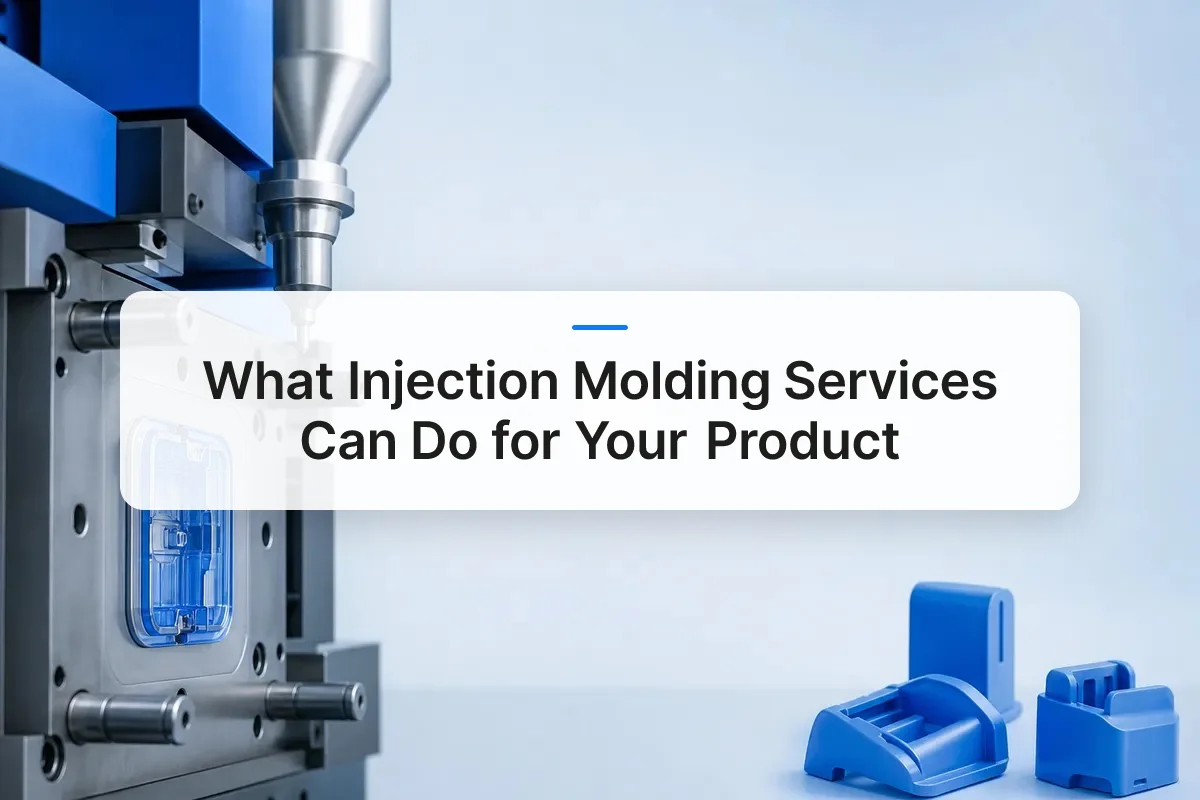
How Does Injection Molding Work and What Makes It Suitable for Precision Manufacturing?
Injection molding works by forcing molten resin into a hardened steel or aluminum mold cavity under pressure, where it cools into the exact shape the mold was cut to hold. The mold itself carries the precision, the plastic simply takes its shape, which is what makes the process repeatable at scale. Providers of injection molding services rely on this repeatability to guarantee consistent output across long production runs.
What Are the Main Steps in the Injection Molding Process from Design to Finished Part?
The cycle starts long before any plastic melts. A mold is designed from the part’s CAD model, then machined, usually by CNC milling or EDM, to tolerances tighter than the part itself requires, since any error in the tool carries straight through to every part it produces.
Once the mold is mounted in the press, production runs through five repeating stages:
- Clamping the two mold halves shut with enough force to resist injection pressure
- Injecting molten resin into the cavity through a runner system
- Holding pressure while the part cools and solidifies
- Opening the mold
- Ejecting the finished part with pins or plates
A single cycle can take anywhere from a few seconds to about a minute depending on wall thickness and material, then the press closes and repeats it, part after part, with no manual rework between cycles. This is the operational core that most injection molding services are built around.
What Tolerances and Surface Finishes Can Injection Molding Achieve?
This is the structural reason injection molding suits precision work: the cavity, not a moving cutting tool or a stacked layer, defines the geometry. Processes like CNC machining must fight tool deflection and wear across a cut, and 3D printing builds shape layer by layer with inherent stacking error, injection molding instead reproduces the same cavity surface on every shot, so dimensional drift mostly comes from material shrinkage, which toolmakers account for when cutting the mold.
Holding pressure, melt temperature, and cooling time consistent from shot to shot is what keeps part 1 and part 10,000 dimensionally alike. Modern presses monitor and adjust these parameters in real time, which is why injection molding remains the standard for medical, automotive, and electronics components that must interchange without hand-fitting.
Achievable tolerances vary with part geometry and material, but well-run tooling routinely holds features within a few thousandths of an inch, with surface finishes ranging from mirror-polished to textured, matte, or EDM finishes specified directly in the mold steel. That range of precision and finish is exactly what separates true injection molding services from generic plastic part suppliers, a client needing a medical housing with a cosmetic finish and a sealed snap-fit has very different mold and process requirements than one needing a utility bracket. GC INDUS builds that distinction into tooling strategy and inspection planning from the first design review, not after the first bad batch of parts. Providers such as Protolabs’ injection molding services and Xcentric’s injection molding services similarly emphasize tooling precision as the foundation of part consistency.
What Factors Affect Injection Molding Services Costs and Lead Times?
Mold complexity, production volume, material choice, and tooling type are the four levers that determine what an injection molding project costs and how long it takes to deliver. Each one interacts with the others, so a quote that looks high in isolation often reflects a deliberate trade-off elsewhere in the schedule.
How Do Tooling Costs, Production Volume, and Material Selection Impact Your Total Project Cost?
Mold complexity sets the floor for tooling cost. A single-cavity mold with straight pulls and simple cooling lines sits on the budget-friendly end; add multiple cavities, undercuts that need side-action slides, or conformal cooling channels, and the tool moves into premium territory because it demands more machining time, more precision, and more maintenance over its life.
Production volume changes the math entirely. Tooling cost is fixed regardless of how many parts you run, so it amortizes across the order, a high unit volume spreads that upfront investment thin, while a short run carries a larger tooling cost per part. This is why low-volume and prototype work favors faster, less expensive tooling, and high-volume production justifies a hardened tool built to last.
Material selection affects both the part price and the clock. Resins with higher viscosity or higher melting points need more injection pressure and longer cooling cycles, which slows every shot and adds up across a production run. Engineering-grade resins also cost more per pound than commodity plastics like polypropylene, and some specialty or flame-retardant grades have longer supplier lead times that can push back your start date before the first shot is even made.
What’s the Difference Between Rapid Tooling and Traditional Tooling, and When Should You Use Each?
Rapid tooling uses aluminum molds that machine faster and cost less, making it the right call for prototypes, bridge production, and validation runs where tool life of a few thousand to low tens of thousands of shots is enough. Traditional tooling uses hardened steel, takes longer to design and machine, and costs more upfront, but it holds tolerance over hundreds of thousands of cycles, which is what high-volume production actually requires.
Lead time depends on more than the mold itself. Several stages stack before full production starts:
- Design-for-manufacturability (DFM) review and iteration
- Mold design and machining
- Resin availability and sourcing
- First-article validation or sampling runs
Providers offering injection molding services as one of several in-house processes can often compress this stack because tooling, molding, and finishing happen under one roof instead of shuttling between vendors. GC INDUS runs injection molding alongside CNC machining and die casting with ISO 9001-certified inspection at each stage, which keeps DFM feedback and tooling decisions in one conversation rather than several. Other established injection molding services, such as PCBWay’s injection molding service, follow a similar staged approach from rapid tooling through to production runs.
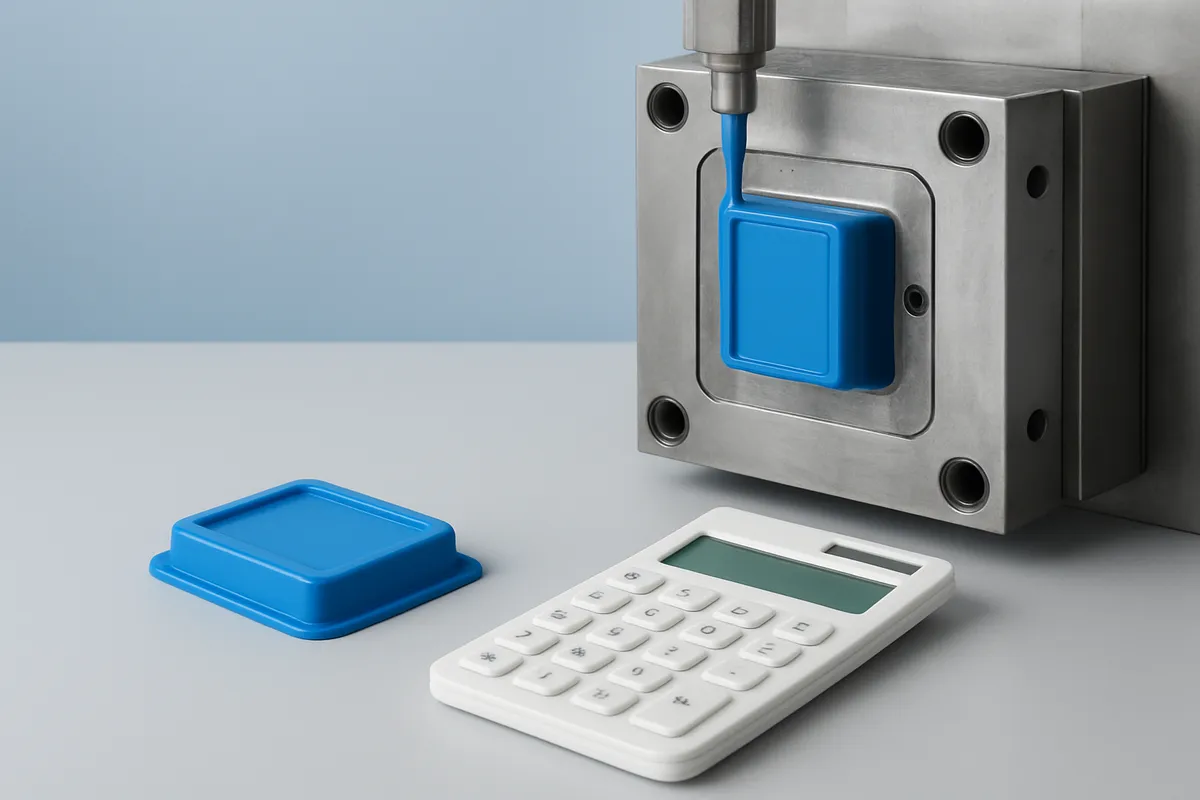
How Do You Choose the Right Materials and Tooling Approach for Injection Molding?
Material selection and tooling strategy depend on the part’s mechanical load, operating temperature, cosmetic finish, and production volume, get any one wrong and the mold needs rework. The right choice happens before the mold is cut, not after the first sample part fails a drop test.
What Materials Are Available for Injection Molding and How Do They Perform in Different Applications?
Resins fall into three practical groups, and knowing which group a part belongs to narrows the decision fast:
- Commodity plastics (polypropylene, polyethylene, ABS): general-purpose housings, packaging, and consumer parts where cost matters more than extreme performance
- Engineering plastics (nylon, polycarbonate, acetal): structural strength, dimensional stability, or heat resistance, common in automotive brackets and load-bearing enclosures
- Specialty resins (PEEK, PPS, flame-retardant and chemical-resistant grades): demanding cases such as under-hood automotive components, medical devices exposed to sterilization cycles, or electronics housings near flame-safety requirements
Resin choice doesn’t stop at mechanical properties. Every material has a shrinkage rate, and that rate interacts directly with wall thickness and part geometry to determine whether the final piece warps after ejection. Thicker walls cool unevenly, and semi-crystalline resins like nylon shrink more aggressively than amorphous ones like polycarbonate, a mismatch between resin and wall design is one of the most common causes of warped or out-of-spec parts. Picking the material and the wall strategy together, rather than sequentially, avoids that problem before steel is cut. For a broader look at where these trade-offs show up in practice, see this overview of injection molding applications and benefits.
What Design Guidelines Should You Follow to Optimize Parts for Injection Molding?
Four design rules govern whether a part molds cleanly or fights the process at every shot:
- Uniform wall thickness: uneven walls cool at different rates and produce sink marks on the cosmetic surface
- Adequate draft angles: missing draft causes parts to stick or scuff on ejection
- Properly sized ribs: oversized ribs pull material from adjoining walls and create visible sink on the opposite face
- Gate placement that fills the cavity evenly: poor gate location leads to weld lines, short shots, or trapped air
These defects often aren’t visible until the first molded sample comes off the tool.
This is where design-for-manufacturing (DFM) feedback earns its keep. A molding partner that reviews geometry before cutting steel catches these issues on screen instead of on a $20,000 mold. GC INDUS builds DFM review into its injection molding services alongside its CNC and die casting lines, so feedback on wall thickness, draft, and gating comes from people running the same tooling that will produce the part. That review loop, paired with a path from prototype tooling to production-grade molds, lets a design move from first sample to volume output without restarting the tooling conversation at each stage.
What Quality Standards and Certifications Should You Expect from an Injection Molding Service?
Real quality assurance means documented process control, traceable materials, and inspection records tied to every production run, not a certificate framed on a lobby wall. Evaluating injection molding services on paper credentials alone misses the operational discipline that actually prevents defective parts from reaching your line.
What Does ISO 9001 Actually Govern?
ISO 9001 certification requires a documented quality management system covering process control, corrective action, and material traceability from raw resin to finished part. It does not certify that a supplier makes good parts, it certifies that the supplier has a repeatable, auditable process for catching problems and fixing them. GC INDUS holds ISO 9001 certification across its manufacturing operations, which means every job runs through defined inspection checkpoints with records a client can request during an audit.
Beyond ISO Standards, What Certifications Matter for Medical, Automotive, or Food-Contact Applications?
Each regulated industry adds its own documentation layer on top of general quality management, and the right certification depends on where the part ends up. Medical device components need biocompatibility testing and full material and process traceability, ISO 13485 governs this, and GC INDUS maintains that certification specifically to support medical device manufacturers who cannot accept ambiguity in sterilization or material history. Automotive parts typically require dimensional validation records such as first-article inspection reports and capability studies, since a supplier chain audit will ask for proof that every cavity produces parts within tolerance, not just a sample. Food-contact parts carry their own material compliance requirements, verifying that resins meet migration and contact-safety standards before they touch packaging or consumables. Skipping the right certification for the application is not a paperwork gap, it is a regulatory risk the client inherits.
How Do Quality Assurance Processes Ensure Consistent Precision Across Production Runs?
Consistent precision comes from catching deviation before it compounds, using first-article inspection, in-mold sensors, and statistical process control sampling throughout the run. First-article inspection confirms the initial parts off a new or repaired mold match the drawing before full production starts. In-mold sensors then monitor pressure and temperature shot to shot, flagging the kind of drift that signals mold wear long before dimensions drift out of spec. Statistical process control sampling pulls parts at set intervals across a run, so a tooling issue surfaces at part 500 instead of part 50,000.
This matters for schedules as much as for quality. A defect caught at hour two of a production run costs a mold adjustment; the same defect caught at delivery costs a missed launch date and a full rework cycle. Inspection protocols built into the process, not bolted on at the end, are what keep on-time delivery commitments realistic rather than aspirational. This is one of the reasons buyers compare injection molding services on documented quality systems rather than price alone.
When Should You Use Injection Molding Versus CNC Machining or 3D Printing?
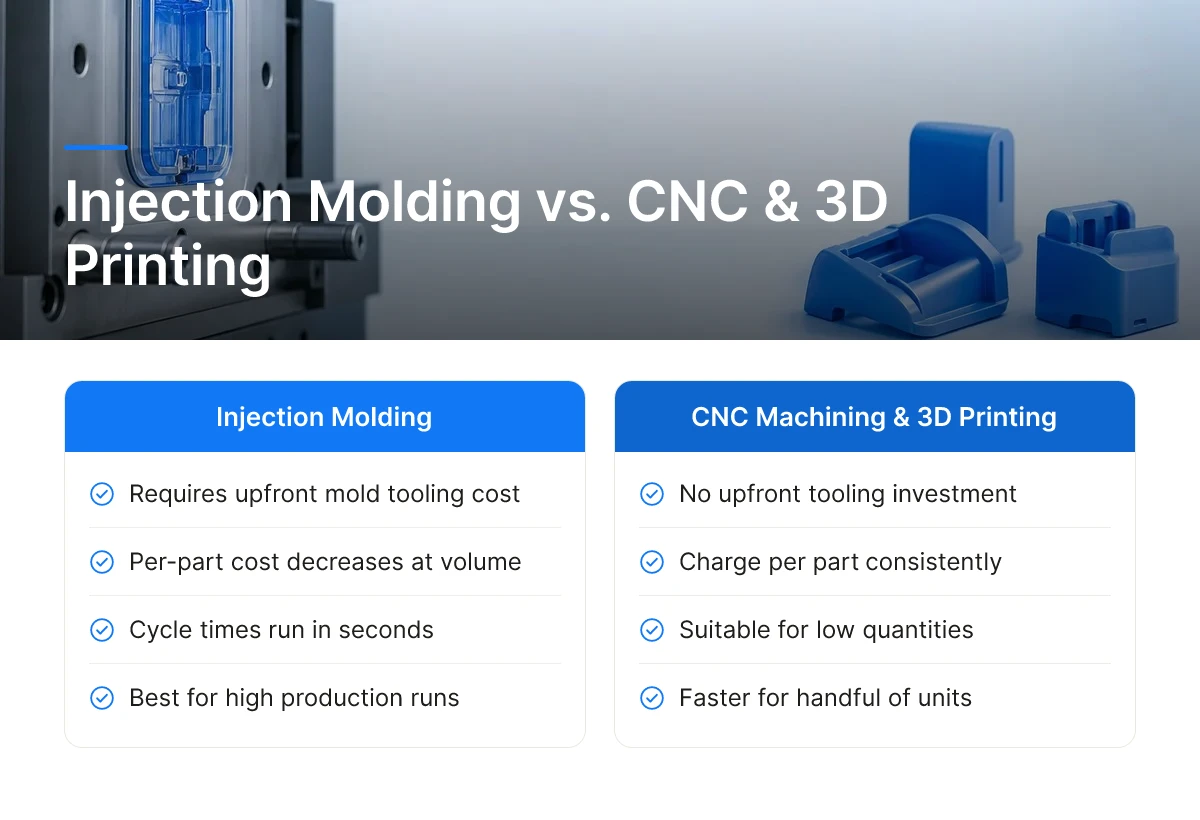
Choose based on production volume and timeline, not habit: low quantities favor CNC machining or 3D printing, while rising volume shifts the math toward molding.
Each process carries a different cost structure. CNC machining and 3D printing charge per part with no upfront tooling, which makes them cheaper for a handful of units. Injection molding requires cutting a steel or aluminum mold before the first part exists, so the mold cost gets spread across the production run. Below a certain quantity, that tooling investment doesn’t pay off. Above it, injection molding wins on a per-part basis because cycle times run in seconds rather than minutes.
What Are the Cost and Lead-Time Advantages of Injection Molding at Different Production Volumes?
Injection molding becomes cost-effective once order volume is high enough to absorb the mold-build cost across many identical parts, typically for production runs rather than one-off builds.
3D printing and CNC machining skip mold-build time entirely, a design can go from CAD file to finished part within days, which matters when a product launch deadline won’t wait. Injection molding asks for patience upfront: tooling design, mold fabrication, and sampling take real time before production starts. Once the mold is built, though, output speed changes completely. A single cavity can produce a part every few seconds, and multi-cavity tools multiply that further, which is why injection molding dominates the medical device, electronics, and automotive components space where tens of thousands of identical plastic parts are the baseline, not the exception.
The practical takeaway: short production runs or urgent one-off parts rarely justify a mold. High-volume programs rarely make sense without one.
How Does Injection Molding Compare to Alternatives in Terms of Part Complexity and Customization?
3D printing handles intricate geometries with no tooling constraints, CNC machining holds tight tolerances in metal, and injection molding excels at high-volume identical plastic parts.
3D printing has no mold to work around, so internal channels, lattice structures, and organic shapes that would be impossible or expensive to tool are straightforward to print. CNC machining is the better choice when a part needs tight-tolerance metal features, GC INDUS holds tolerances to ±0.001mm on machined components, a precision level molding doesn’t match on metal parts. Injection molding is built for the opposite problem: thousands of plastic parts that need to be exactly the same, part after part, with no drift in dimensions.
A practical path many clients follow: prototype with 3D printing or CNC machining first, validate fit and function, then move to injection molding services once the design is locked and volume justifies tooling. GC INDUS supports that full path, CNC machining and reverse engineering for prototypes and custom components, then injection molding and assembly once the part is ready for production, all under one quality system instead of switching vendors mid-project.
Frequently Asked Questions
Can injection molding handle both prototype and full production runs?
Yes, the same process scales from single-cavity prototype tools to multi-cavity production molds without changing the core method. Teams typically start with a low-cost prototype mold to validate fit and function, then move to a hardened production tool once the design is locked. GC INDUS supports this path with flexible minimum order quantities starting from 1 piece, so clients don’t need a separate vendor for each stage.
How does mold complexity affect how long a project takes from quote to first shipped part?
Mold complexity is the main driver of lead time, since more cavities, undercuts, or tight tolerances mean more design and machining time. A simple single-cavity tool can be ready in days, while multi-cavity or insert-molded tools take longer to cut, test, and adjust. Material selection and surface finish requirements add further time on top of the base tooling schedule.
What happens if a part design needs to change after the mold is already built?
Minor changes are often possible through mold modifications, but major geometry shifts usually require a new tool. Adding ribs, adjusting wall thickness, or relocating gates can sometimes be done by welding or re-machining steel, which costs less than starting over. Significant changes to part dimensions or cavity count, though, typically mean building a new mold rather than reworking the existing one.
Do all injection molded parts need secondary finishing or assembly after molding?
No, many parts ship straight from the mold, but functional or cosmetic requirements often call for extra steps. Common additions include deburring, surface treatment, heat treatment, or assembly into larger components. GC INDUS builds these finishing and assembly steps into its process so clients receive parts ready for integration rather than raw moldings needing further work.
How should a buyer compare different injection molding services before committing to a supplier?
Compare based on documented quality systems, in-house process range, and willingness to provide DFM feedback before tooling starts, not just quoted price. Suppliers that combine injection molding with CNC machining or die casting under one quality system can often move a project from prototype to production faster. Ask for sample inspection reports and certification scope to confirm claims match actual practice.
Conclusion
Choosing an injection molding partner comes down to three practical checks: can they move a design from prototype tool to production mold without a vendor handoff, do they document tolerances and inspection results rather than just promise them, and can they fold in finishing and assembly so parts arrive ready to use. Mold complexity and documented quality control, not marketing claims, are what actually determine lead time and part consistency.
If you’re evaluating a molder now, send your CAD file and target tolerance for a direct quote comparison, GC INDUS reviews specs under ISO 9001 and ISO 13485 protocols and responds with a fast quote covering tooling, material, and finishing in one package.
Recommended Articles
Explore more from our content library:


