
Book Appointment Now

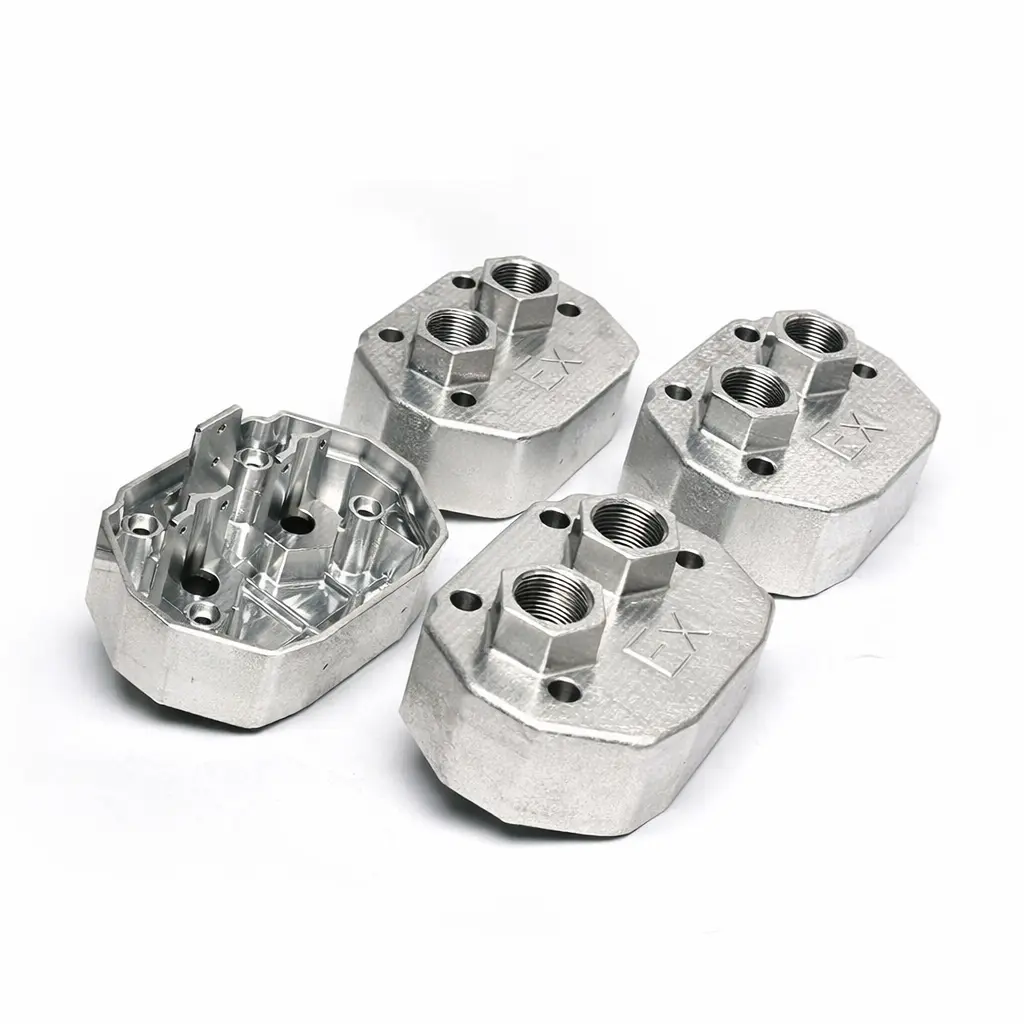
Investment & Precision Casting: A Complete Guide
Learn how investment and precision casting works, its key benefits, materials, tolerances, and how to choose the right casting partner for your parts.
| Key Insight | Explanation |
|---|---|
| What it is | Investment and precision casting (also called lost-wax casting) produces complex metal parts with tight tolerances and excellent surface finish, often eliminating secondary machining. |
| Typical tolerances | Standard investment casting achieves tolerances of ±0.1mm to ±0.25mm; post-cast CNC machining can push this to ±0.001mm for critical features. |
| Compatible materials | Aluminum, stainless steel, carbon steel, magnesium, iron, and superalloys are all routinely cast using this process. |
| Key industries | Aerospace, medical devices, automotive, defense, and industrial equipment rely heavily on precision casting for critical components. |
| Quality standard | ISO 9001 certification is the baseline quality benchmark; ISO 13485 is required for medical device casting applications. |
| When to choose it | Choose investment casting over die casting or machining when parts are geometrically complex, require near-net-shape output, or need high-temperature alloys. |
Investment and precision casting is a manufacturing process that uses a wax pattern coated in ceramic to produce complex metal parts with exceptional dimensional accuracy and smooth surface finishes. It’s one of the oldest metal-forming techniques still in active industrial use. Engineers choose it when geometry is too complex for machining alone, and when surface quality and near-net-shape output matter.
The process delivers repeatable results across aerospace, medical, automotive, and industrial applications. Parts produced through investment casting often require little to no secondary machining, which reduces cost and lead time. For high-mix, lower-volume production runs, it’s frequently the most economical route to a finished, inspection-ready component.
This guide covers how the process works, what materials and tolerances are achievable, where it outperforms competing methods, and what to look for in a casting partner. Whether you’re evaluating investment casting for the first time or optimizing an existing supply chain, you’ll find practical, specific answers here.
What Is Investment and Precision Casting?
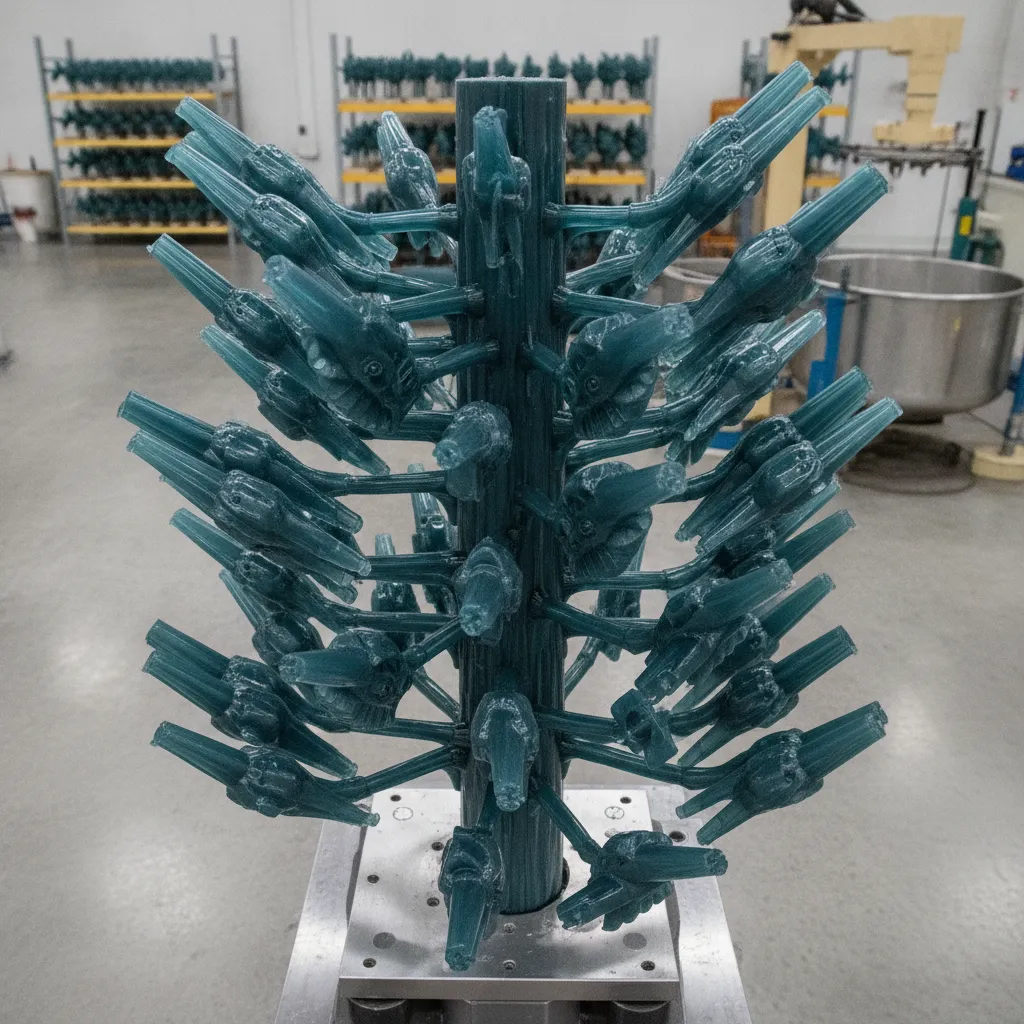
Investment and precision casting is a near-net-shape metalworking process where a wax model of the desired part is coated in ceramic slurry, the wax is melted out, and molten metal is poured into the resulting hollow shell. The term “investment” refers to the ceramic shell that encases (invests) the wax pattern.
Definition and Industrial Context
The process is also widely known as lost-wax casting, a name that traces back thousands of years. In modern industrial practice, it produces parts with complex internal geometries, thin walls, and fine surface detail that would be difficult or impossible to achieve through CNC machining alone. According to the Wikipedia entry on investment casting, the process is based on one of the oldest known metal-forming techniques, now adapted for high-volume industrial production with modern alloys and process controls.
The phrase “precision casting” is often used interchangeably with investment casting, though it can also refer more broadly to any casting method that achieves tight dimensional tolerances. For practical purposes, the two terms describe the same process family.
Why It Matters for Engineers and Buyers
The real value of investment and precision casting is geometric freedom. You can cast undercuts, internal passages, thin ribs, and complex contours in a single operation. That consolidates what might otherwise be multiple machined components into one cast part, reducing assembly steps and potential failure points.
- Near-net-shape output reduces material waste and machining time
- Excellent surface finish (typically Ra 1.6–3.2 µm) straight from the mold
- Suitable for a wide range of alloys including stainless steel, aluminum, and superalloys
- Repeatable dimensional accuracy across production runs
- Compatible with both low-volume prototypes and medium-volume production
Industry analysts note that demand for precision castings has grown steadily through 2024–2026, driven by aerospace lightweighting requirements, medical device miniaturization, and the electrification of automotive drivetrains. Parts that once required extensive post-cast machining are increasingly being designed for near-net-shape casting from the start, reducing total cost of ownership.
Pro Tip: When evaluating investment casting for a new part, ask your supplier for the achievable casting tolerance before you finalize the design. Designing to the process’s natural capability (rather than adding tight tolerances everywhere) can cut tooling and inspection costs by 20–30%.
How Investment and Precision Casting Works
Investment and precision casting follows a multi-step process: a wax pattern is created, coated in ceramic, dewaxed, filled with molten metal, and then finished. Each stage directly affects the final part’s dimensional accuracy and surface quality.
The Step-by-Step Casting Process
- Wax pattern production: A wax replica of the part is injection-molded using a metal die. For complex assemblies, multiple wax patterns are attached to a central wax “tree” or sprue.
- Shell building: The wax assembly is repeatedly dipped into ceramic slurry and coated with fine sand or stucco. Each layer is dried before the next is applied. Typically 5–15 layers are built up to create a shell thick enough to withstand molten metal.
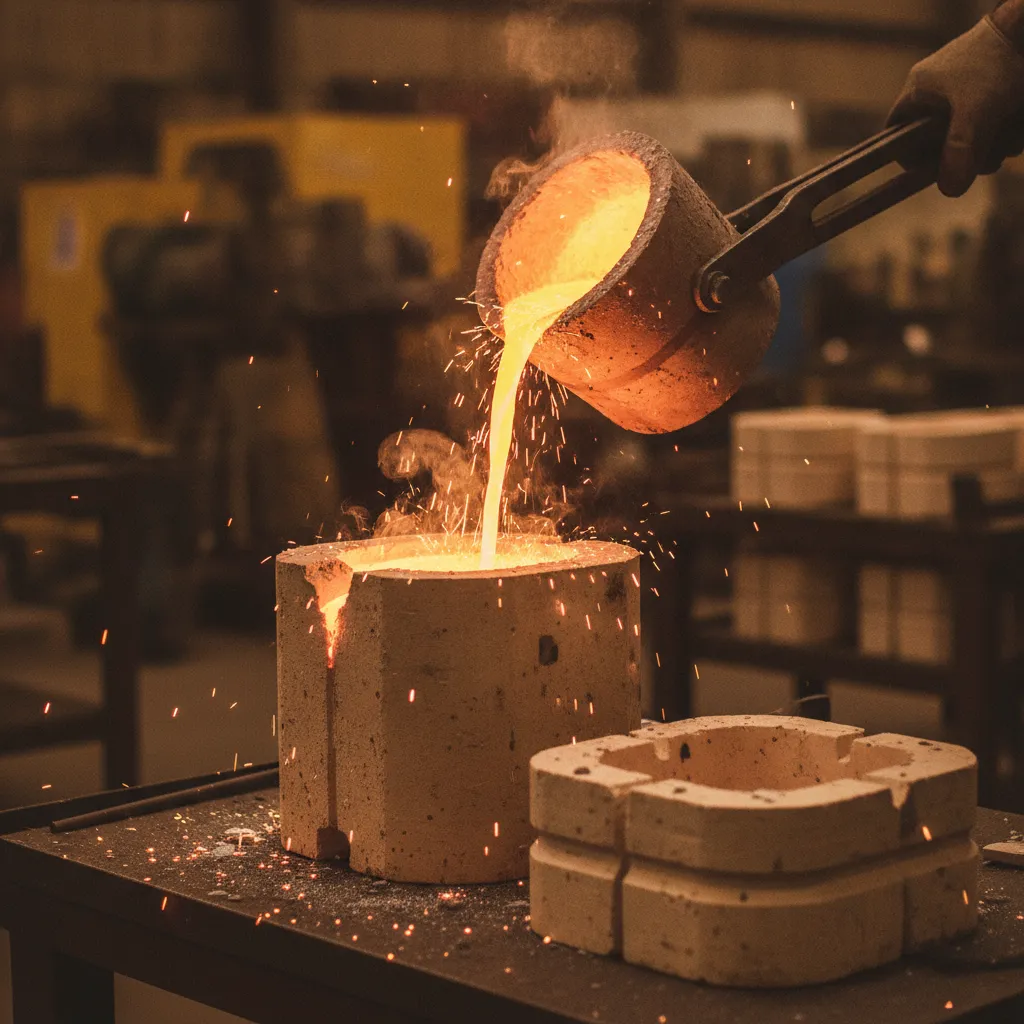
- Dewaxing: The ceramic shell is placed in an autoclave or flash-fire furnace. The wax melts out (hence “lost-wax”), leaving a hollow ceramic mold. Recovered wax is often recycled.
- Mold firing: The shell is fired at high temperature (typically 900–1100°C) to burn out residual wax and strengthen the ceramic. This also preheats the mold, which improves metal flow and reduces thermal shock.
- Metal pouring: Molten metal is poured into the hot ceramic shell. Gravity pouring is most common, though vacuum-assisted casting is used for reactive alloys or thin-walled parts.
- Shell removal: After solidification and cooling, the ceramic shell is broken away mechanically or by water blasting. Individual parts are cut from the tree.
- Finishing and inspection: Parts undergo gate removal, grinding, heat treatment (where required), surface treatment, and dimensional inspection. CNC machining is applied to critical features requiring tighter tolerances.
Materials Used in Precision Casting
One of investment casting’s strengths is its broad material compatibility. The casting-china.org overview of investment casting confirms that the process accommodates an extensive range of ferrous and non-ferrous alloys.
| Material | Typical Applications | Key Advantage |
|---|---|---|
| Stainless Steel (316, 17-4PH) | Medical instruments, food equipment, marine | Corrosion resistance, biocompatibility |
| Aluminum Alloys | Aerospace brackets, automotive housings | Low weight, good machinability |
| Carbon and Alloy Steel | Industrial valves, pump bodies, tooling | High strength, cost-effective |
| Magnesium Alloys | Lightweight structural components | Lightest structural metal available |
| Nickel Superalloys | Turbine blades, high-temperature parts | Retains strength above 1000°C |
| Cobalt Alloys | Dental implants, orthopedic devices | Wear resistance, biocompatibility |
For guidance on choosing the right alloy for your specific application, our article on material selection for machined parts covers the trade-offs in detail.
Key Benefits of Investment and Precision Casting
Investment and precision casting delivers near-net-shape parts with complex geometry, excellent surface finish, and consistent dimensional accuracy, reducing downstream machining costs and assembly complexity across a wide range of alloys.
Geometric and Dimensional Advantages
The most compelling reason to choose investment casting is design freedom. You’re not constrained by tool access or parting-line restrictions the way you are with die casting or CNC machining. Internal passages, undercuts, and thin walls (down to 0.75mm in some alloys) are all achievable.
- Standard dimensional tolerances of ±0.1mm to ±0.25mm directly from the mold
- Surface roughness of Ra 1.6–3.2 µm without secondary finishing
- Complex geometries cast in a single operation, reducing part count
- Thin walls and fine detail reproduced consistently across production runs
- Near-net-shape output minimizes material waste compared to machining from billet
In one project we handled for an industrial pump manufacturer, switching from machined billet stainless steel to investment cast components reduced per-part material cost by 35% and cut machining time by more than half. The casting handled all the complex internal passages; CNC machining was reserved for the sealing faces and threaded bores where tight tolerances were non-negotiable.
Economic and Supply Chain Benefits
Investment casting tooling (the wax injection die) is significantly cheaper than die casting tooling. For medium-complexity parts, a wax die might cost $2,000–$8,000 versus $20,000–$80,000 for a die casting tool. That makes investment casting economically viable at much lower volumes. For more information, see Viticulture De Precision En Medoc Guide Complet.
- Lower tooling cost than die casting, especially for complex geometries
- Fewer secondary operations reduce total cost of ownership
- Consolidates multi-part assemblies into single cast components
- Compatible with low-volume production (prototype quantities) through to medium-volume runs
- Broad alloy compatibility reduces the need to change processes when switching materials
The Bureau of Industry and Security assessment of investment castings identifies the process as strategically important for defense and aerospace supply chains precisely because of this combination of geometric capability and material flexibility. Precision casting isn’t just a cost play. It’s a capability play.
Pro Tip: If your part requires both casting and post-cast CNC machining, work with a supplier who handles both in-house. Outsourcing the machining step to a third party introduces dimensional handoff risk and adds lead time. At GC INDUS, we’ve found that integrated casting-plus-machining workflows consistently deliver better first-article pass rates than split-source approaches.
Interestingly, precision-driven thinking extends well beyond metal manufacturing. The concept of applying precise, data-driven methods to optimize yield and quality appears across industries. For example, practitioners in agriculture have developed detailed frameworks for precision management, such as this Viticulture De Precision En Medoc Guide Complet, which applies granular process control to vineyard management in much the same spirit that precision casting applies it to metalworking.
Common Challenges in Investment and Precision Casting
the practice involves multiple interdependent process steps, and defects introduced early (in wax pattern quality or shell building) compound through the process, making upstream process control critical to achieving consistent dimensional results.
Process-Related Defects and How They Occur
A common mistake is treating investment casting as a “set and forget” process once tooling is approved. In practice, each production run requires active monitoring. The most frequent defect types include:
- Shrinkage porosity: Occurs when metal solidifies unevenly, leaving voids. Caused by poor gating design or insufficient feeding.
- Shell cracking: Thermal shock during pouring breaks the ceramic shell, causing metal penetration or dimensional distortion.
- Cold shuts: Two metal streams meet before fully fusing, creating a visible seam and a structural weak point.
- Wax pattern distortion: If wax patterns aren’t stored correctly, they deform before shell building, propagating dimensional errors into the final part.
- Inclusions: Ceramic particles from shell breakout contaminate the casting surface or interior.
From experience, wax pattern quality is the single biggest lever on final part accuracy. A distorted wax produces a distorted casting, and no amount of downstream correction fully compensates for that. Suppliers who invest in temperature-controlled wax storage and automated wax injection equipment consistently deliver better first-article results.
Design and Specification Pitfalls
One pitfall to watch for is over-tolerancing. Engineers sometimes apply CNC machining tolerances (±0.01mm or tighter) to features that don’t functionally require them. This forces unnecessary post-cast machining, driving up cost without improving part performance.
- Apply tight tolerances only to mating surfaces, sealing faces, and critical functional features
- Design draft angles (typically 0.5–2°) into vertical walls to aid wax pattern ejection
- Avoid abrupt section thickness changes, which cause differential shrinkage and warpage
- Specify surface finish requirements explicitly (Ra value) rather than leaving them open to interpretation
Our guide on CNC machining tolerance and precision covers how to tier your tolerance specifications intelligently across cast and machined features, which is directly applicable here.
The Investment Casting Institute recommends involving your casting supplier in design review before tooling is cut. Design-for-casting (DFC) reviews routinely identify 3–5 changes that reduce cost and improve yield without compromising function.
Best Practices for Investment Casting in 2026
As of 2026, the most effective investment casting programs combine rigorous design-for-casting reviews, in-process quality checkpoints, and integrated post-cast machining to consistently deliver parts that meet dimensional and surface finish requirements on the first production run.
Quality Assurance and Inspection Protocols
Quality assurance in investment casting isn’t a final inspection event. It’s a continuous process starting with wax pattern approval. The ISO 9001 quality management framework provides the structural backbone for this, requiring documented control plans, inspection records, and corrective action processes at each stage.
For medical device components, ISO 13485 adds biocompatibility documentation, traceability requirements, and stricter non-conformance handling. These aren’t optional extras. They’re the minimum standard for any casting entering a regulated supply chain.
- First article inspection (FAI) against a full dimensional report before production release
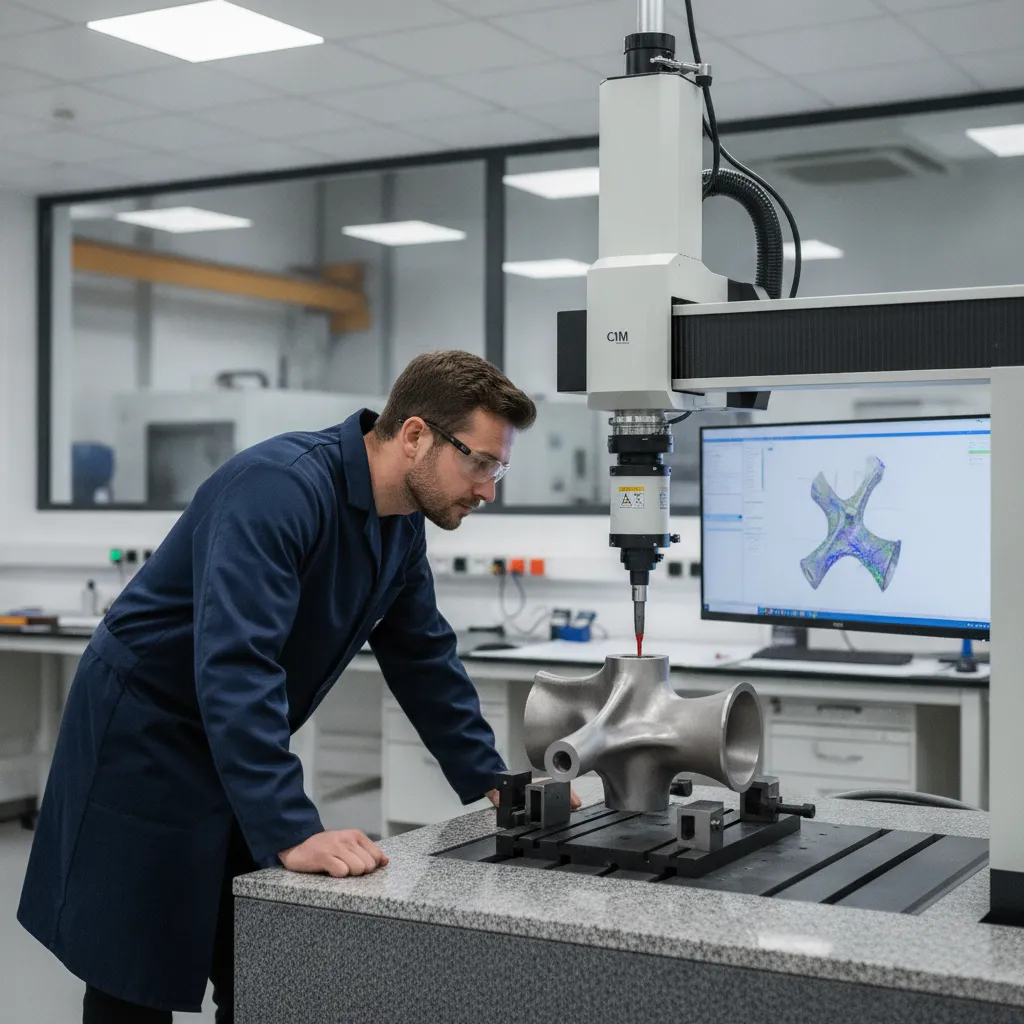
- In-process wax pattern inspection using coordinate measuring machines (CMM)
- Shell thickness monitoring during shell building
- Radiographic testing (X-ray) or dye penetrant inspection for internal defect detection
- Final CMM inspection of critical features against drawing tolerances
- Material certification (mill certs) retained for traceability
Our article on implementing quality control checkpoints maps out exactly where to place inspection gates in a casting-plus-machining workflow for maximum defect detection efficiency.
Pro Tip: Request a control plan document from your casting supplier before production begins. A supplier who can’t produce a written control plan with defined inspection points and acceptance criteria for each stage is operating without adequate process discipline. This single document tells you more about a supplier’s quality maturity than any certification certificate.
Integrating Casting with CNC Machining
The most capable precision casting programs treat casting and machining as a single integrated workflow, not two separate operations. When casting and post-cast CNC machining are performed under one roof, datum alignment is preserved, and the machining program is written with knowledge of the as-cast geometry.
- Use cast-in datum features (bosses, pads) as machining references to minimize setup error
- Machine critical features in a single setup where possible to avoid cumulative positioning error
- Apply surface treatments (anodizing, passivation, powder coating) after final machining, not before
- Specify heat treatment requirements before machining to account for dimensional change
Our team at GC INDUS recommends reviewing CNC tool path optimization strategies alongside your casting design, particularly for parts where post-cast machining covers more than 20% of the surface area. Tool path efficiency on cast parts differs meaningfully from billet machining because the stock allowance is non-uniform.
Industry analysts tracking the transition to automated manufacturing note that investment casting foundries adopting automated wax injection, robotic shell dipping, and inline dimensional scanning are achieving defect rate reductions of 40–60% compared to manual processes. As of 2026, this automation wave is accelerating across mid-tier casting suppliers, not just large-volume aerospace foundries.
Frequently Asked Questions
1. What is the difference between investment casting and die casting?
Investment casting uses a ceramic mold built around a wax pattern, while die casting injects molten metal under high pressure into a reusable steel die. Investment casting handles more complex geometries and a wider range of alloys, including high-temperature steels and superalloys. Die casting is faster and cheaper per part at high volumes but requires more expensive tooling and is limited mainly to aluminum, zinc, and magnesium alloys. For complex, lower-volume parts or exotic materials, this practice is usually the better choice.
2. What tolerances can investment casting achieve?
Standard investment casting achieves dimensional tolerances of ±0.1mm to ±0.25mm directly from the mold, depending on part size and geometry. Linear tolerances per the Investment Casting Institute guidelines are typically ±0.005 inches (±0.127mm) for the first inch, with ±0.002 inches added per additional inch. Where tighter tolerances are required (±0.01mm or better), post-cast CNC machining is applied to those specific features. Combining casting with precision machining allows tolerances as tight as ±0.001mm on critical dimensions.
3. What materials can be used in investment and precision casting?
Investment casting is compatible with a very wide range of metals. Commonly cast materials include stainless steel (304, 316, 17-4PH), carbon and alloy steels, aluminum alloys, magnesium alloys, cobalt alloys, nickel superalloys, and titanium. This broad material compatibility is one of investment casting’s key advantages over die casting, which is generally limited to non-ferrous alloys. The process can also handle reactive alloys when vacuum-assisted casting is used.
4. How long does the investment casting process take?
Lead time for investment casting depends on whether tooling (wax dies) already exists. For new parts, tooling fabrication typically takes 3–6 weeks. Once tooling is approved, production casting lead times are generally 4–8 weeks for standard orders, including shell building, casting, finishing, and inspection. Expedited programs can compress this to 2–3 weeks in some cases. Post-cast CNC machining and surface treatment add time depending on complexity. Suppliers with integrated casting and machining capabilities consistently deliver shorter total lead times.
5. Is investment casting suitable for small production runs?
Yes. Investment casting is economical at relatively low volumes because tooling costs are modest compared to die casting. Wax injection dies typically cost $2,000–$8,000 for medium-complexity parts, making the process viable from prototype quantities (10–50 pieces) up to medium-volume production runs (5,000–50,000 pieces annually). For very high volumes (100,000+ pieces per year), die casting or forging may offer lower per-unit cost, but this method remains competitive wherever geometry complexity or alloy requirements favor it.
6. What industries use investment and precision casting most heavily?
Aerospace and defense are the largest consumers of investment castings, using the process for turbine blades, structural brackets, and fuel system components. Medical device manufacturers rely on it for surgical instruments, implant components, and diagnostic equipment housings. Automotive suppliers use it for transmission components, exhaust manifolds, and sensor housings. Industrial equipment, oil and gas, and marine sectors also depend heavily on investment casting for valves, pump bodies, and impellers.
7. How do I choose the right investment casting supplier?
Evaluate potential suppliers against these criteria: ISO 9001 certification (baseline quality management), ISO 13485 if you’re in medical devices, in-house CNC machining capability for post-cast work, documented first article inspection (FAI) process, material traceability with mill certificates, and experience with your specific alloy and industry. Ask for a control plan document and sample FAI reports from comparable projects. A supplier who handles casting, machining, surface treatment, and assembly under one roof reduces coordination risk and typically delivers shorter lead times.
8. What surface finishes are achievable with investment casting?
Investment casting naturally produces surface roughness values of Ra 1.6–3.2 µm (63–125 µin), which is significantly better than sand casting (Ra 6.3–25 µm) and comparable to some machined surfaces. For applications requiring smoother finishes, post-cast operations including grinding, polishing, shot blasting, anodizing, passivation, or powder coating can be applied. The as-cast surface quality depends on the ceramic shell material and the alloy being cast; finer-grain shell materials produce smoother surfaces.
Conclusion
this strategy remains one of the most capable and versatile metal-forming processes available to engineers and procurement teams as of 2026. It delivers geometric complexity, broad material compatibility, and consistent dimensional accuracy that few competing processes can match, particularly for medium-complexity parts in low-to-medium production volumes.
The process works best when casting and post-cast machining are treated as an integrated workflow, tolerances are specified intelligently (tight only where function demands it), and quality assurance runs through every stage from wax pattern to final inspection. Suppliers who hold ISO 9001 and ISO 13485 certifications and perform in-house CMM inspection provide the most reliable path to first-article approval and production consistency.
GC INDUS delivers this approach across aluminum, stainless steel, magnesium, iron, and steel, combined with in-house CNC machining, surface treatment, heat treatment, and assembly. We hold tolerances to ±0.001mm on post-cast features and operate under ISO 9001 and ISO 13485 quality systems. If you’re evaluating precision casting for an upcoming project, our team can review your design and provide a detailed quote, typically within 24 hours.
Recommended Articles
Explore more from our content library:


